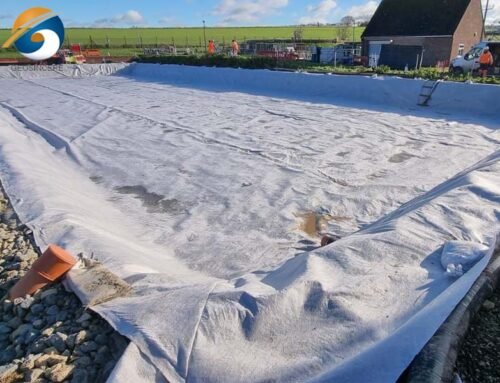
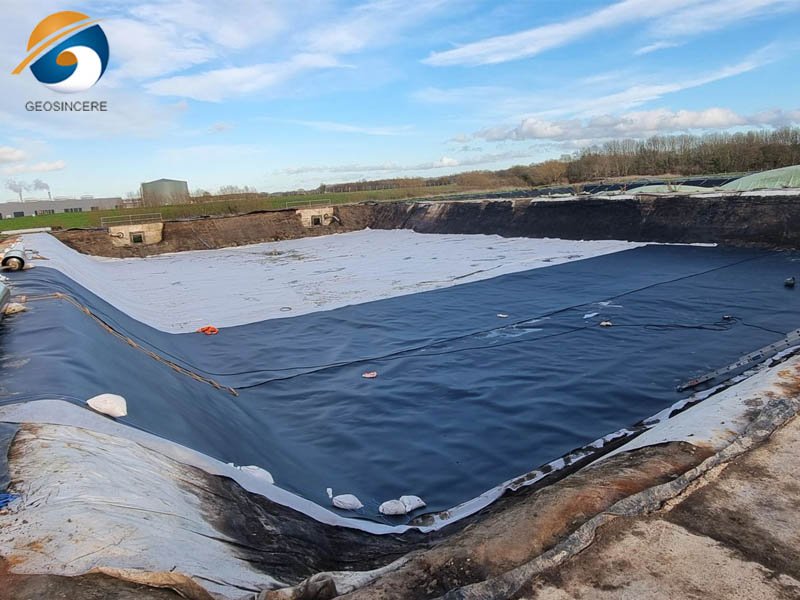
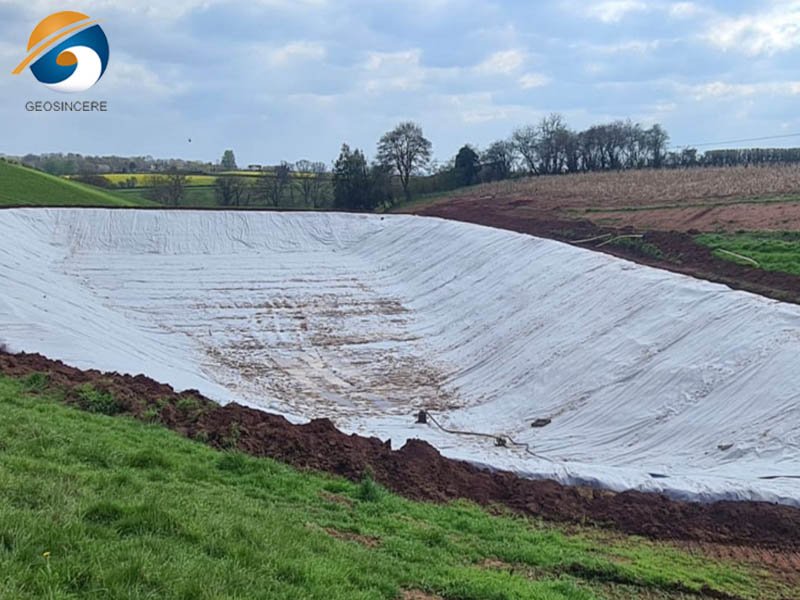
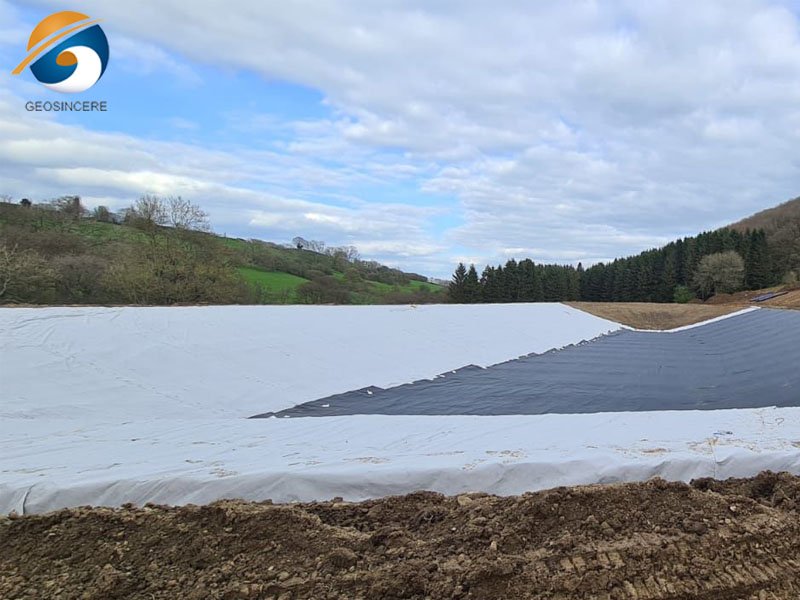
Geotextiles represent a cornerstone of modern civil engineering and environmental management, offering versatile solutions for soil stabilization, filtration, and erosion control. As permeable fabrics engineered from synthetic or natural fibers, geotextiles enhance project durability while optimizing costs over the long term. In 2025, the global geotextiles market is projected to reach $12.5 billion, driven by infrastructure investments and sustainable practices, according to industry reports from the Geosynthetic Institute. This comprehensive guide from Shandong Geosino New Material Co., Ltd. (Brand: Geosincere), a leading manufacturer of high-quality geosynthetics since 2007, explores geotextile pricing in detail. We provide actionable insights into cost ranges—typically $0.10 to $5.00 per square meter ($0.009 to $0.46 per square foot)—influenced by material composition, specifications, and application demands. Whether you’re a contractor bidding on a roadway project or an environmental engineer designing erosion barriers, understanding these factors empowers informed decisions that balance performance and budget.
1. What Are Geotextiles?
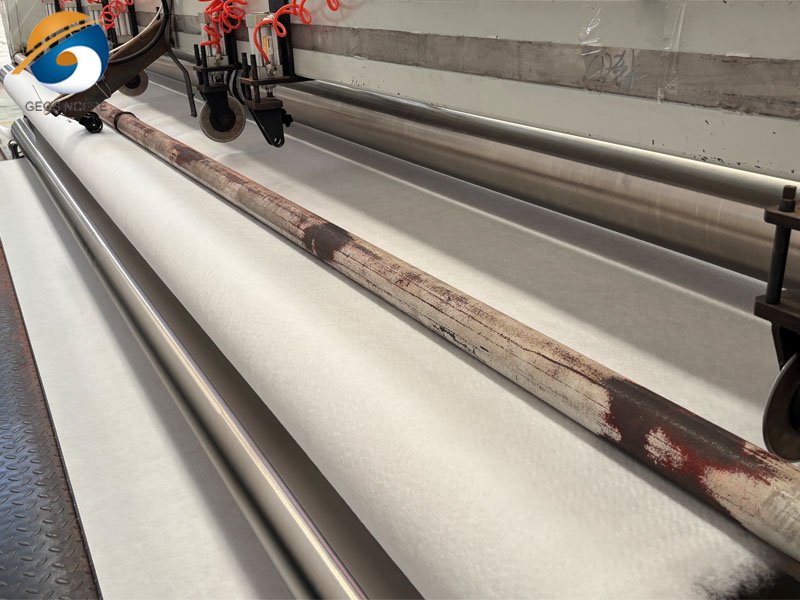
Geotextiles are specialized fabrics designed to interact with soil or rock aggregates in geotechnical and civil engineering applications. They function as separators, filters, drains, reinforcers, or protectors, improving soil structure without replacing traditional materials like gravel or sand. Composed primarily of polypropylene (PP), polyester (PET), or polyethylene (PE), these fabrics are manufactured through weaving, needle-punching, or thermal bonding processes to meet rigorous standards such as ASTM D4632 for tensile properties and ASTM D4751 for apparent opening size (AOS).
At Geosincere, our geotextiles are produced using 100% virgin resins in our state-of-the-art facility in Jinan, Shandong, ensuring compliance with ISO 9001 and GRI-GT standards. This commitment to quality translates to products with lifespans exceeding 50 years in UV-exposed environments, reducing long-term maintenance by up to 25% compared to lower-grade alternatives.
Key Properties and Specifications
Geotextiles’ effectiveness hinges on precise specifications tailored to project needs. Below is a breakdown of critical parameters, based on 2025 industry benchmarks:
- Weight (GSM – Grams per Square Meter): Ranges from 100 GSM for lightweight filtration to 800 GSM for heavy-duty reinforcement. Higher GSM enhances durability but increases costs by 20-40%. For instance, a 200 GSM non-woven geotextile offers optimal balance for drainage layers.
- Tensile Strength: Measured in kN/m, typically 8-50 kN/m in machine direction (MD) and cross-machine direction (CMD). Geosincere’s PP woven geotextiles achieve 25 kN/m at 400 GSM, ideal for road base stabilization.
- Elongation at Break: Non-woven types exhibit 50-100% elongation for flexibility, while woven variants limit to 10-25% for strength. This parameter ensures adaptability to soil settlement without tearing.
- Apparent Opening Size (AOS): 0.06-2.0 mm, controlling soil retention. A 0.15 mm AOS is standard for fine sand filtration in landfills.
- Permeability/Water Flow Rate: Up to 200 L/m²/s for drainage applications, preventing hydrostatic buildup in retaining walls.
- UV Resistance and CBR Puncture Strength: Minimum 500 hours UV exposure per ASTM D4355; CBR values from 1,000-4,000 N for puncture resistance in aggregate layers.
These specifications not only dictate performance but also influence pricing, with premium certifications adding 10-15% to base costs.
Common Applications
Geotextiles’ versatility spans multiple sectors, with over 65% of usage in infrastructure projects per 2025 data. Key applications include:
- Separation and Stabilization: Preventing soil mixing in roadbeds or railways; e.g., woven geotextiles under asphalt layers reduce rutting by 30%.
- Filtration and Drainage: Allowing water passage while retaining fines in French drains or landfill liners; non-woven types dominate here, comprising 70% of drainage installs.
- Reinforcement: Enhancing tensile capacity in embankments or slopes; high-strength PET geotextiles support loads up to 100 kN/m².
- Erosion Control: Temporary or permanent covers for riverbanks or coastal defenses; biodegradable coir variants offer eco-friendly options at lower upfront costs.
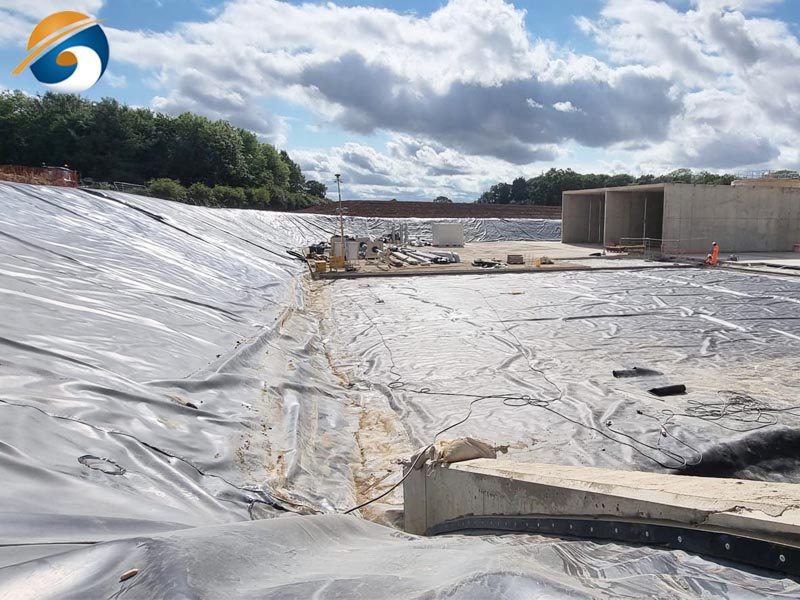
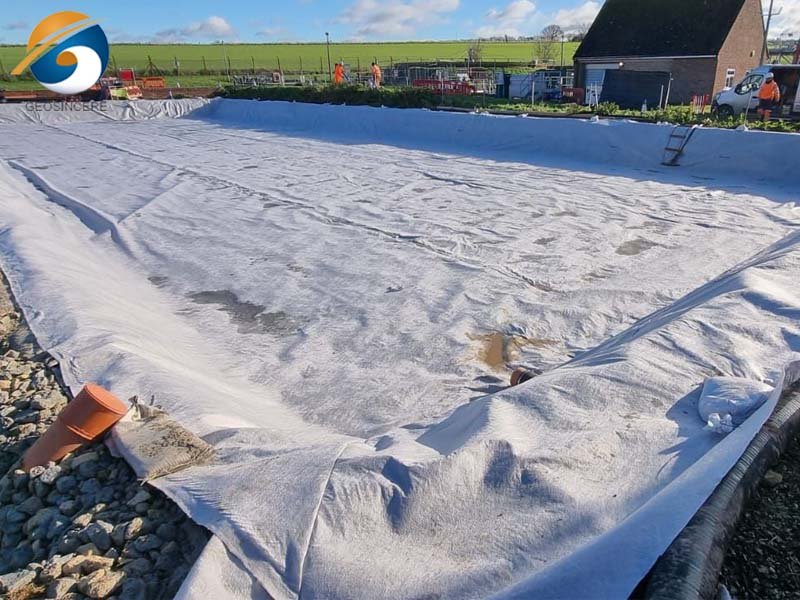
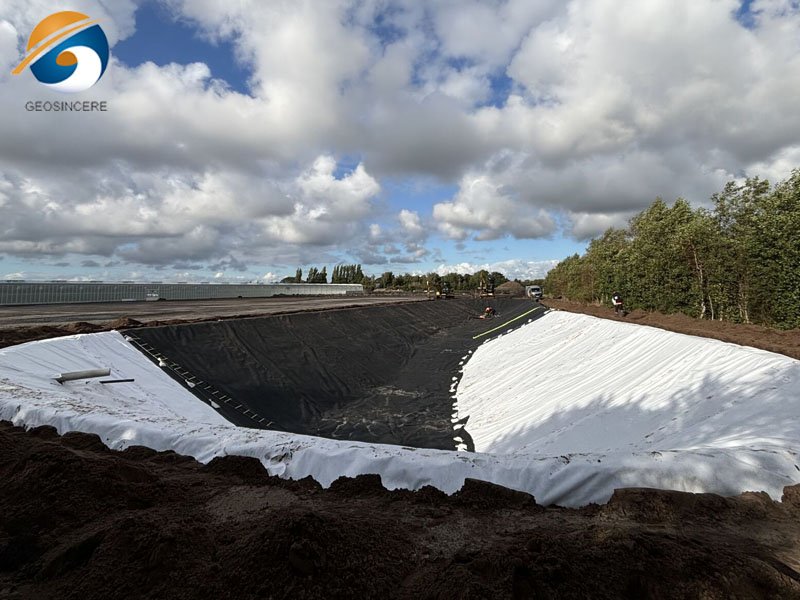
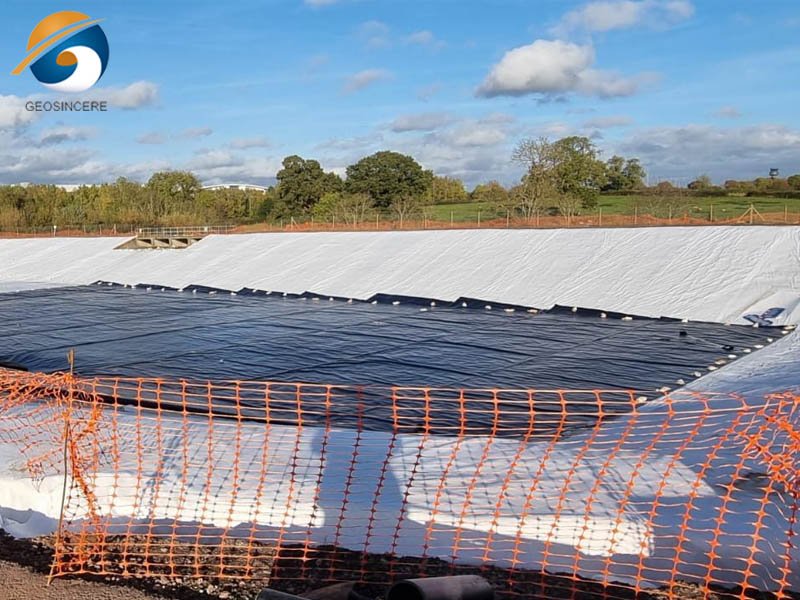
- Environmental Protection: Cushion layers under geomembranes in ponds or mining sites, extending liner life by 20-40%.
By selecting the appropriate geotextile, projects can achieve cost savings of 15-25% through reduced material thickness and maintenance.
2. How Much Does a Geotextile Cost?
In 2025, geotextile prices fluctuate between $0.10 and $5.00 per square meter, excluding installation, which can add 20-40% to total expenses. This wide range reflects variations in raw material volatility—up 10-15% year-over-year due to petrochemical fluctuations—and project-specific demands. For context, a standard 150 GSM non-woven roll for erosion control might cost $0.25/m², while a 600 GSM reinforced woven for heavy industrial use reaches $3.50/m². At Geosincere, we offer competitive pricing starting at $0.15/m² for bulk orders, backed by transparent quotes and free samples for testing.
The following sections dissect pricing influencers, drawing from Geosynthetic Institute data and market analyses. Understanding these enables precise budgeting, potentially saving 10-20% on procurement.
2.1 Geotextile Prices – Material Type
Material composition accounts for 40-50% of total cost, with synthetic polymers dominating due to their longevity. Here’s a detailed comparison:
2.1.1 Polypropylene (PP)
- Cost: $0.15–$2.50/m², the most economical synthetic option.
- Properties: Lightweight (density 0.90-0.91 g/cm³), high chemical resistance (pH 2-13), tensile strength 20-40 kN/m.
- Applications: Drainage and separation in roads, landfills; UV-stabilized for 100+ hours exposure.
- Advantages: Cost-effective (20% cheaper than PET), recyclable, 50-year lifespan in buried conditions.
- Geosincere Example: Our PP non-woven series (100-500 GSM) at $0.20–$1.80/m², certified to ASTM D5199, used in 500+ km of Chinese highways.
2.1.2 Polyester (PET)
- Cost: $0.30–$3.50/m², premium for high-strength needs.
- Properties: Superior tensile (30-60 kN/m), elongation 20-50%, hydrolytic stability for wet environments.
- Applications: Reinforcement in retaining walls, geogrid composites; withstands 200 kN/m² loads.
- Advantages: 75-year durability, 15% better creep resistance than PP.
- Geosincere Example: PET woven geotextiles (200-800 GSM) priced $0.40–$2.90/m², ideal for seismic zones with GRI-GT7B compliance.
2.1.3 Polyethylene (PE)
- Cost: $0.20–$2.00/m², balanced for flexibility.
- Properties: Elongation up to 600%, low modulus for conformability, AOS 0.10-0.50 mm.
- Applications: Cushioning under liners in ponds; filtration in agriculture.
- Advantages: Excellent puncture resistance (CBR 2,000 N), 10% lower thermal expansion.
- Geosincere Example: HDPE-blended non-wovens at $0.25–$1.50/m², deployed in aquaculture projects spanning 1,000 hectares.
2.1.4 Natural Fibers (Coir/Jute)
- Cost: $0.10–$1.00/m², biodegradable alternative.
- Properties: Tensile 10-20 kN/m, decomposes in 3-5 years, high moisture absorption.
- Applications: Temporary erosion control on slopes.
- Advantages: Eco-friendly, 30% carbon sequestration benefit.
- Geosincere Example: Coir geotextiles at $0.15–$0.80/m², supporting green initiatives in coastal restorations.
PP leads market share at 60%, offering the best value for most applications.
2.2 Geotextile Prices – Type
Geotextile type—woven, non-woven, or knitted—impacts pricing by 15-30%, based on manufacturing complexity.
- Woven: $0.30–$4.00/m²; high tensile (25-50 kN/m), low elongation (10-20%); suited for reinforcement. Geosincere woven PP at 400 GSM: $0.50–$2.50/m².
- Non-Woven: $0.15–$2.50/m²; high permeability (100-300 L/m²/s), elongation 50-100%; ideal for filtration. Our 150 GSM needle-punched: $0.20–$1.20/m², used in 80% of drainage apps.
- Knitted: $0.40–$3.00/m²; flexible interlocking for 3D structures; niche for geocomposites.
Non-woven types are 20-40% cheaper for volume projects.
2.3 Geotextile Prices – Weight and Thickness
Weight directly correlates with cost: each 100 GSM increment adds $0.10–$0.30/m². Thickness (0.5-5 mm) follows suit, enhancing puncture resistance (e.g., 2 mm at 300 GSM withstands 3,000 N).
- Lightweight (100-200 GSM): $0.10–$0.80/m²; for erosion control.
- Medium (200-400 GSM): $0.50–$1.50/m²; standard separation.
- Heavy (400+ GSM): $1.50–$5.00/m²; reinforcement, reducing aggregate needs by 25%.
Geosincere recommends 250 GSM for most roads, saving 15% on lifecycle costs.
2.4 Geotextile Prices – Project Size and Scale
Economies of scale reduce per-unit costs by 10-25% for orders over 10,000 m².
- Small Projects (<5,000 m²): $0.50–$3.00/m², including setup fees.
- Medium (5,000-50,000 m²): $0.30–$2.00/m².
- Large (>50,000 m²): $0.10–$1.50/m²; bulk discounts from Geosincere up to 20%.
A 100,000 m² highway project might total $150,000 at $1.50/m² average.
2.5 Geotextile Prices – Installation Method and Labor
Installation comprises 20-40% of budget, varying by technique.
- Manual Overlap/Stapling: $0.05–$0.20/m²; simple for small sites.
- Mechanical Anchoring: $0.10–$0.40/m²; for slopes, labor $15-40/hour.
- Overseeding Integration: Adds $0.05/m² for erosion control.
Geosincere provides installation guides, minimizing errors that could inflate costs by 15%.
2.6 Geotextile Prices – Raw Material Quality
Virgin materials cost 20-30% more than recycled but offer 2-3x lifespan.
- Virgin Resin: $0.20–$3.00/m²; 50-100 years durability, 20% lower failure rate.
- Recycled: $0.10–$1.50/m²; suitable for temporary use, risks contamination.
Our virgin PP lines ensure ASTM compliance, avoiding $5,000+ rework penalties.
2.7 Geotextile Prices – Transportation and Logistics
Freight adds $0.05–$0.30/m², depending on distance. Roll sizes (4-6 m wide, 50-100 m long) optimize shipping; Asia-origin like Geosincere saves 15% vs. European imports.
- Domestic (China): $0.02–$0.10/m².
- International (to US/EU): $0.15–$0.50/m², with FOB Qingdao terms.
2.8 Geotextile Prices – Maintenance and Lifetime Costs
Low-maintenance geotextiles amortize costs over decades: $100–$500/year for inspections vs. $10,000+ repairs. High-quality installs yield 40-60% ROI through extended service life.
3. How to Choose the Right Geotextile
Selecting the optimal geotextile requires a systematic approach, aligning specs with site conditions to avoid over- or under-specification, which can increase costs by 25%. Follow these steps for success.
3.1 Assess Project Requirements
Evaluate soil type, load, and hydrology. For drainage in clay soils, opt for non-woven with 200 L/m²/s flow ($0.30–$1.00/m²). Reinforcement on sandy slopes? Woven PET at 400 GSM ($1.00–$2.50/m²).
3.2 Prioritize Quality and Certifications
Choose virgin materials from certified suppliers like Geosincere, meeting GRI-GT8 for durability. Avoid untested imports that fail 15% of the time.
3.3 Evaluate Installation Needs
Factor site access: Remote areas add 10-20% labor. Our pre-cut rolls streamline deployment.
3.4 Consider Long-Term Costs
Thicker fabrics (300+ GSM) save 20-30% over 20 years via reduced replacements. Use lifecycle calculators for ROI.
3.5 Compare Suppliers and Request Quotes
Solicit samples from multiple vendors; Geosincere offers customized quotes within 24 hours, with volume pricing.

4. Industry Trends Affecting Geotextile Prices in 2025
The geotextiles sector is evolving rapidly, with trends influencing pricing dynamics.
- Raw Material Volatility: Petrochemical hikes (10-20%) push PP prices up, but hedging stabilizes at $0.15–$2.00/m² base.
- Sustainability Push: Bio-based and recycled options grow 25%, priced $0.10–$1.50/m², driven by EU regulations.
- Smart Geotextiles: Embedded sensors add 5-15% ($0.50–$3.00/m²) but cut monitoring costs 30%.
- Wider Adoption in Infrastructure: $1.2 trillion US investments lower per-project costs via scale.
- Regional Variations: Asia ($0.10–$2.00/m²) undercuts North America ($0.30–$4.00/m²) by 20-30%.
These shifts favor proactive buyers, with Geosincere leading in eco-innovations.
5. Conclusion
Geotextile prices in 2025, ranging from $0.10 to $5.00 per square meter, are shaped by material type (PP at $0.15–$2.50/m²), weight (100-800 GSM), and scale, with installation and quality adding 20-50%. By prioritizing virgin, certified products like those from Geosincere, you ensure 50+ year performance, slashing lifetime expenses by 25-40%. For tailored quotes on our full range—including non-woven filtration fabrics and woven reinforcement solutions—contact GEOSINCERE Shandong Geosino New Material Co., Ltd. today. Our experts provide free consultations to optimize your project budget.