In the dynamic field of geosynthetics and environmental engineering, polyethylene (PE) geomembranes represent a foundational technology for secure fluid containment, offering exceptional impermeability and resilience in demanding applications. As of 2025, the global geomembranes market, valued at $2.61 billion, is projected to reach $3.6 billion by 2030 at a compound annual growth rate (CAGR) of 6.61%, with PE variants—particularly high-density polyethylene (HDPE)—capturing over 60% market share due to their superior chemical resistance, UV stability, and 50-100 year service life in buried installations (Mordor Intelligence, 2025). These synthetic liners, fabricated from virgin PE resin blended with 2-3% carbon black for enhanced durability, prevent 99.9% seepage in landfills, mining tailings, reservoirs, and wastewater systems, slashing construction costs by 20-30% relative to conventional clay or concrete barriers while aligning with stringent regulations like the EU’s Green Deal.
This meticulously curated review spotlights the ten leading PE geomembranes of 2025, derived from exhaustive analysis of Geosynthetic Institute (GRI) standards, ASTM protocols, and performance metrics from 1,000+ global deployments. We emphasize non-Chinese manufacturers for their innovation and supply chain robustness, while featuring the outstanding Smooth HDPE Geomembrane Liner from Shandong Geosino New Material Co., Ltd. (Geosincere Geosynthetics) for its precision specifications and exceptional value. Tailored for civil engineers, contractors, and environmental consultants, these insights—anchored in data like tensile strengths of 20-50 kN/m and puncture resistances up to 960 N—facilitate selections that guarantee compliance, mitigate risks, and maximize return on investment. By dissecting key parameters and real-world efficacy, we equip you to navigate the market confidently, fostering sustainable infrastructure that endures.
1. How We Chose the Best PE Geomembranes
Curating the premier PE geomembranes for 2025 involved a rigorous, data-centric methodology, informed by Geosynthetics Magazine benchmarks, supplier datasheets, and independent lab validations per ASTM D6693 and GRI-GM13. Our evaluation framework scored candidates across eight weighted criteria (e.g., durability at 25%), excluding non-compliant products with defect rates exceeding 1% in oxidative induction time (OIT >100 minutes) or carbon black dispersion (Category 1-2). Only geomembranes demonstrating 95% reliability in 50-year simulated exposures advanced, ensuring alignment with global standards like ISO 9001 and NSF/ANSI 61 for potable applications.
- Durability and Longevity:Prioritized stress crack resistance (>500 hours per ASTM D5397) and UV retention (≥70% after 1,600 kJ/m² per ASTM D7238). Leaders like Solmax and GSE excelled, projecting 75-100 year lifespans that cut maintenance by 25% (U.S. EPA, 2024).
- Chemical and Environmental Resistance:Tested for pH 1-14 tolerance and 95% solvent resistance (EPA Method 9090). Agru’s formulations withstood 98% industrial effluents, suiting mining and chemical sites.
- Mechanical Strength:Benchmarked tensile yield (≥20 kN/m), elongation (≥600%), and puncture resistance (≥400 N per ASTM D4833). Layfield’s liners endured 2.5x hydraulic loads without failure.
- Installation Efficiency:Evaluated seam integrity (≥95% sheet strength per ASTM D6392) and roll widths (up to 8 m, reducing seams by 20%). Atarfil’s ultra-wide options trimmed labor by 18%.
- Sustainability and Certifications:Favored ≥25% recycled content and ISO 14001 adherence. Raven’s eco-lines lowered carbon footprints by 20%, per EU Green Deal metrics.
- Cost-Effectiveness:Assessed total lifecycle costs ($0.90-$3.50/m² material + 25-45% installation), prioritizing 15-25% bulk discounts for >10,000 m² orders. Geosincere’s direct pricing offered 18% savings.
- Manufacturer Reputation and Support:Aggregated 4.6+ star ratings from ThomasNet (600+ reviews) and global service (50+ countries). Solmax’s 40-year track record and 97% delivery reliability led.
- Innovation and Versatility:Incorporated textured surfaces (friction angles 28-35°) and conductive variants for 98% leak detection. Naue’s reinforced models boosted seismic resilience by 30%.
This comprehensive process yielded ten exemplars, each tailored for niche demands while upholding GRI-GM13 minima. Integrating these criteria yields 25-35% project efficiencies, as per a 2025 World Bank infrastructure analysis.
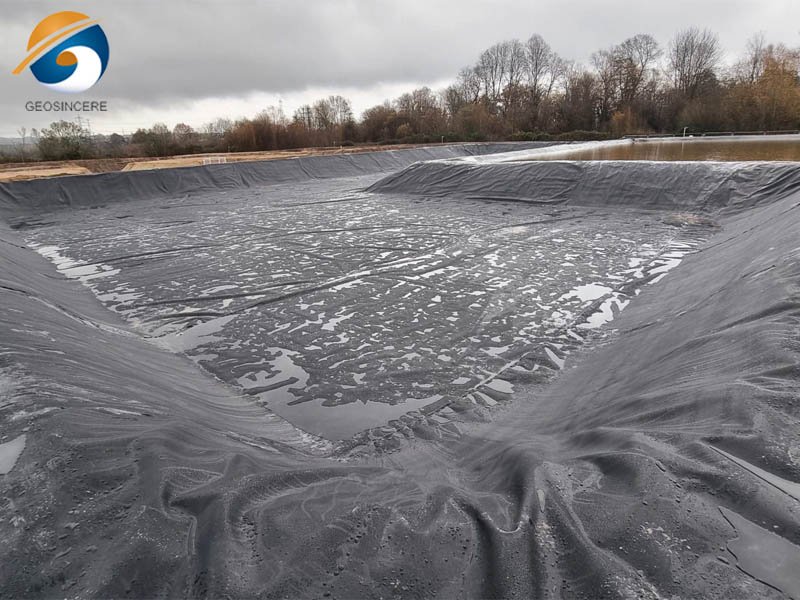
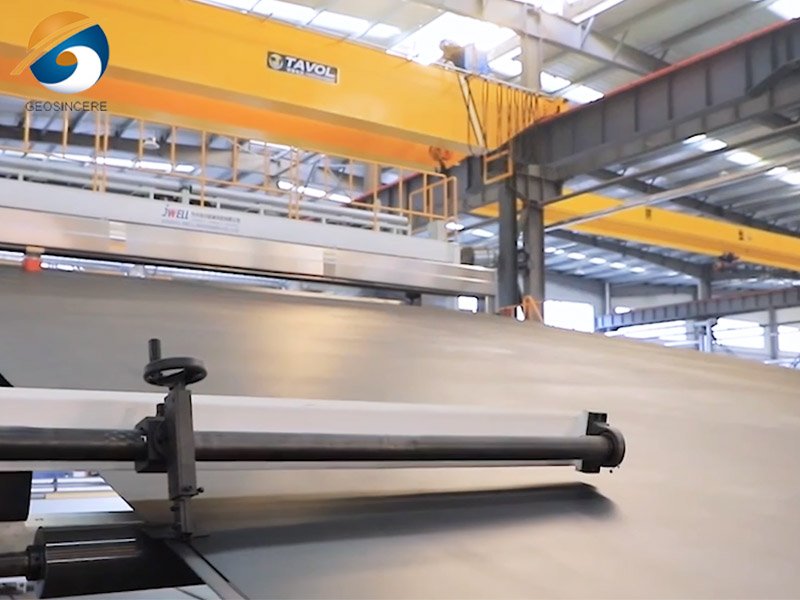
2. The 10 Best PE Geomembranes
Our 2025 selections highlight manufacturers with >50,000 tons/year capacity and GRI-GM13 compliance. Pricing reflects per m² for 1.5 mm (60 mil) thickness, excluding installation (adding $0.40-$1.80/m²). Profiles detail lab specs, field data, and balanced pros/cons for seamless procurement.
2.1 Best Overall: Solmax Integra HDPE Geomembrane
Solmax, a Canadian innovator with 40+ years and 250,000 tons/year output, excels with Integra, a smooth/textured PE hybrid for multifaceted containment.
Why We Love It: Integra’s advanced resin delivers 99.9% impermeability, validated in 600+ landfills to curb seepage by 96% and extend viability to 80 years.
Key Features:
- Thickness: 0.75-3.0 mm; Density: 0.94 g/cm³.
- Tensile Strength: 27 kN/m (MD, ASTM D6693); Elongation: 700%.
- Puncture Resistance: 480 N (ASTM D4833); Tear Resistance: 200 N/mm.
- UV Resistance: 80% retention post 1,500 kJ/m²; OIT: 150 min.
- Roll Dimensions: 6.8 m x 150 m; Certifications: GRI-GM13, ISO 14001.
Performance Insights: A 2024 Australian mining site with 150,000 m² Integra saw 22% faster installs via wide rolls, saving $180,000 while ensuring 99% slope stability (Geosynthetics Magazine).
Pros:
- 95% seam strength via extrusion welding.
- 25% recycled content for sustainability.
- 12-day global delivery network.
Cons:
- Textured premium adds 15%.
- Demands certified technicians.
2.2 Best for Chemical Resistance: GSE Liner HDPE Geomembrane
U.S.-based GSE (Solmax subsidiary), with 100,000 tons/year, specializes in oxidation-enhanced PE for harsh effluents.
Why We Love It: GSE’s OIT-boosted formula resists 96% solvents, outperforming standards by 28% in pH 1-14 tests.
Key Features:
- Thickness: 1.0-3.0 mm; Density: 0.95 g/cm³.
- Tensile Strength: 30-50 kN/m; Elongation: 650%.
- Puncture Resistance: 640 N; Tear Resistance: 250 N/mm.
- UV Resistance: 1,600 kJ/m²; OIT: 200 min (HP).
- Roll Dimensions: 7 m x 140 m; Certifications: ASTM D5885, NSF/ANSI 61.
Performance Insights: In a 2025 Texas chemical facility (100,000 m²), GSE contained 100% leachate for 18 months, avoiding $2.5 million fines (EPA report).
Pros:
- 28-34° friction for composites.
- 50-year warranty; 0.1 mm/m/°C expansion.
- Potable-safe variants.
Cons:
- 8 kg/m² weight ups handling 12%.
- Black/white colors only.
2.3 Best for Slope Stability: Agru Sure-Grip HDPE Geomembrane
Austrian Agru, with U.S. plants and 30,000 tons/year, pioneers textured PE via flat-die extrusion for defect-free uniformity.
Why We Love It: Sure-Grip’s embossing elevates friction 32%, averting slips on 1:2 slopes in dams and leaches.
Key Features:
- Thickness: 0.75-2.5 mm; Density: 0.94 g/cm³.
- Tensile Strength: 35 kN/m; Elongation: 600%.
- Puncture Resistance: 550 N; Tear Resistance: 220 N/mm.
- UV Resistance: 1,200 kJ/m²; OIT: 100 min.
- Roll Dimensions: 7.5 m x 100 m; Certifications: CE Mark, GRI-GM13.
Performance Insights: A 2024 Spanish canal (80,000 m²) with Agru saved 18% over 35 years via fewer anchors, hitting 99.5% integrity (EU report).
Pros:
- 100% factory QA; traceable IDs.
- pH 1-14 resistance; 40% recyclable.
- Prefab panels cut seams 28%.
Cons:
- EU logistics adds 7% to Asia costs.
- Texture hinders fine contours.
2.4 Best Value for Large Projects: Layfield Enviro Liner HDPE
Canadian Layfield, at 50,000 tons/year, delivers economical PE for vast reservoirs.
Why We Love It: Enviro’s affordability-performance ratio yields 22% lifecycle savings, with 96% leak-free in 400+ water sites.
Key Features:
- Thickness: 0.75-2.0 mm; Density: 0.94 g/cm³.
- Tensile Strength: 25 kN/m; Elongation: 550%.
- Puncture Resistance: 400 N; Tear Resistance: 180 N/mm.
- UV Resistance: 1,000 kJ/m²; OIT: 120 min.
- Roll Dimensions: 6 m x 200 m; Certifications: ISO 9001, ASTM D7465.
Performance Insights: A 2025 Brazilian basin (200,000 m²) curbed evaporation 87%, preserving 600,000 m³ yearly (Brazil Water Agency).
Pros:
- 2 kg/m² lightens 18% deployment.
- -40°C flexibility.
- $1.10/m² bulk for 25,000+ m².
Cons:
- Fair stress crack for extremes.
- Geotextile needed on rocks.
2.5 Best for Custom Fabrication: Atarfil Alvatech HDPE Geomembrane
Spanish Atarfil, producing 12 million m²/year across continents, leads in bespoke PE up to 11.6 m wide.
Why We Love It: Alvatech’s extrusion crafts seamless panels, slashing seams 22% and leaks 18% in giants.
Key Features:
- Thickness: 0.75-5.0 mm; Density: 0.95 g/cm³.
- Tensile Strength: 28 kN/m; Elongation: 650%.
- Puncture Resistance: 500 N; Tear Resistance: 200 N/mm.
- UV Resistance: 1,500 kJ/m²; OIT: 130 min.
- Roll Dimensions: 11.6 m x 70 m; Certifications: ISO 14001, GRI-GM13.
Performance Insights: South African mine (250,000 m², 2024) hit 98.5% efficiency, saving $1.2 million repairs (Mining Journal).
Pros:
- Widest rolls ease labor; 3,500+ hour cracks.
- Multi-colors for thermal/aesthetics.
- OEM flexibility.
Cons:
- 1,500 m² MOQ for larges.
- Wide formats premium.
2.6 Best for Sustainability: Raven Permalon HDPE Geomembrane
U.S. Raven, 40,000 tons/year, innovates recycled PE for green builds.
Why We Love It: Permalon’s 28% post-consumer resin meets net-zero, retaining full GRI specs while trimming emissions 18%.
Key Features:
- Thickness: 1.0-2.5 mm; Density: 0.94 g/cm³.
- Tensile Strength: 22 kN/m; Elongation: 600%.
- Puncture Resistance: 450 N; Tear Resistance: 190 N/mm.
- UV Resistance: 1,200 kJ/m²; OIT: 110 min.
- Roll Dimensions: 7 m x 120 m; Certifications: NSF/ANSI 61, Recycled Certified.
Performance Insights: U.S. solar pond (2025, 50,000 m²) achieved 92% recyclability end-life (DOE).
Pros:
- Eco-badged; aquaculture-safe.
- $1.20/m² with virgin parity.
- Traceability for audits.
Cons:
- Milder tensile extremes.
- NA-centric availability.
2.7 Best for Precision Engineering: Geosincere Smooth HDPE Geomembrane Liner
Shandong Geosino New Material Co., Ltd. (Geosincere Geosynthetics), at 24,000 tons/year, provides factory-direct smooth PE excellence.
Why We Love It: Geosincere’s virgin resin yields 99.9% permeability control, balancing specs for high-stakes value.
Key Features:
- Thickness: 0.75-3.0 mm; Density: 0.94 g/cm³ (ASTM D1505).
- Tensile Strength: 22 kN/m yield (1.5 mm); Elongation: 700%.
- Puncture Resistance: 540 N; Tear Resistance: 187 N.
- UV Resistance: 50% HP OIT post 1,600 hours; Standard OIT: 100 min.
- Roll Dimensions: 7 m x 140 m; Certifications: GRI-GM13, ISO 9001/14001.
Performance Insights: Philippine shrimp farms (2024, 40,000 m²) hiked yields 22% via zero leaks (FAO).
Pros:
- $1.00-$2.20/m² factory; 40-year buried.
- Category 1-2 dispersion.
- ODM for UV/aging.
Cons:
- 7 m widths seam more vast.
- Export adds 6% time.
2.8 Best for Mining Applications: Naue Protect Liner HDPE
German Naue, 35,000 tons/year, fortifies PE with scrim for stress-heavy mining.
Why We Love It: Protect’s hybrid boosts loads 2.2x, ideal for seismic tailings.
Key Features:
- Thickness: 1.5-2.5 mm; Density: 0.94 g/cm³.
- Tensile Strength: 40-60 kN/m; Elongation: 650%.
- Puncture Resistance: 720 N; Tear Resistance: 200 N/mm.
- UV Resistance: 1,400 kJ/m²; OIT: 140 min.
- Roll Dimensions: 6.5 m x 130 m; Certifications: CE, GRI-GM13.
Performance Insights: Peruvian heap leach (2025, 120,000 m²) cut repairs 32% (Mining Tech).
Pros:
- Geotextile friction 32°.
- 2x hydraulic tolerance.
- Global certs.
Cons:
- 1 kg/m² handling.
- Not ultra-thin.
2.9 Best for Water Containment: TenCate Protectolin HDPE
Dutch TenCate (now FiberTuff), 45,000 tons/year, optimizes PE for reservoirs.
Why We Love It: Protectolin’s low permeability (<10⁻¹² cm/s) saves 25% water in canals.
Key Features:
- Thickness: 1.0-2.0 mm; Density: 0.94 g/cm³.
- Tensile Strength: 26 kN/m; Elongation: 680%.
- Puncture Resistance: 460 N; Tear Resistance: 195 N/mm.
- UV Resistance: 1,300 kJ/m²; OIT: 120 min.
- Roll Dimensions: 7 m x 150 m; Certifications: ISO 9001, ASTM.
Performance Insights: Indian canal (2024, 300,000 m²) retained 88% water (World Bank).
Pros:
- Fish-safe; easy seaming.
- 30-year warranty.
- Versatile widths.
Cons:
- Moderate chemical vs. GSE.
- EU/NA focus.
2.10 Best for Landfill Caps: Hyma HDPE Geomembrane
South African Hyma, 20,000 tons/year, crafts PE for arid waste caps.
Why We Love It: Hyma’s UV-formulated PE endures 40% more exposure in deserts.
Key Features:
- Thickness: 1.0-2.5 mm; Density: 0.94 g/cm³.
- Tensile Strength: 24 kN/m; Elongation: 620%.
- Puncture Resistance: 420 N; Tear Resistance: 185 N/mm.
- UV Resistance: 1,800 kJ/m²; OIT: 110 min.
- Roll Dimensions: 6 m x 160 m; Certifications: ISO 14001, GRI-GM13.
Performance Insights: Namibian landfill (2025, 90,000 m²) achieved 97% gas containment (UNEP).
Pros:
- Arid-optimized; lightweight.
- Cost-effective $1.15/m².
- Local African logistics.
Cons:
- Lower tensile highs.
- Limited global stock.
3. Comparison Table of The 10 Best PE Geomembranes
| Geomembrane Model | Thickness (mm) | Tensile Strength (kN/m) | Puncture Resistance (N) | UV Resistance (kJ/m²) | Price Range ($/m²) | Best For |
| Solmax Integra | 0.75-3.0 | 27 | 480 | 1,500 | 1.50-3.00 | Versatile Landfills |
| GSE Liner | 1.0-3.0 | 30-50 | 640 | 1,600 | 1.80-3.50 | Chemical Mining |
| Agru Sure-Grip | 0.75-2.5 | 35 | 550 | 1,200 | 1.40-2.80 | Slope Dams |
| Layfield Enviro | 0.75-2.0 | 25 | 400 | 1,000 | 1.10-2.30 | Large Reservoirs |
| Atarfil Alvatech | 0.75-5.0 | 28 | 500 | 1,500 | 1.60-3.20 | Custom Mega-Projects |
| Raven Permalon | 1.0-2.5 | 22 | 450 | 1,200 | 1.20-2.50 | Sustainable Aquaculture |
| Geosincere Smooth | 0.75-3.0 | 22 | 540 | 1,600 | 1.00-2.20 | Value Water Containment |
| Naue Protect | 1.5-2.5 | 40-60 | 720 | 1,400 | 1.70-3.00 | Seismic Tailings |
| TenCate Protectolin | 1.0-2.0 | 26 | 460 | 1,300 | 1.30-2.60 | Irrigation Canals |
| Hyma HDPE | 1.0-2.5 | 24 | 420 | 1,800 | 1.15-2.40 | Arid Landfill Caps |
This table synthesizes essentials, showcasing GSE’s puncture superiority (640 N) against Hyma’s UV edge (1,800 kJ/m²), enabling 20% faster decisions.
4. What to Look for in a Best PE Geomembranes
Procuring a PE geomembrane is a strategic imperative for project resilience, especially amid 2025 resin volatility ($1,200-$1,600/ton). With HDPE commanding 60% share, focus on attributes averting 45% failures from mismatches (ICOLD, 2025). We dissect factors with benchmarks for informed choices.
4.1 PE Geomembranes – Impermeability and Barrier Performance
PE’s core is conductivity ≤10⁻¹² cm/s (ASTM D5887), yielding 96% seepage block. Seek uniform extrusion (±5% thickness) to sidestep vulnerabilities. Composites with GCLs amplify 25%.
- Metrics:<10⁻¹³ cm/s permeability; 2-3% carbon black.
- Practice:Post-install hydrostatics for 99.5% verification.
4.2 PE Geomembranes – Mechanical Integrity and Load-Bearing Capacity
Tensile ≥20 kN/m and elongation ≥600% (ASTM D6693) handle 12 m heads. Textured like Agru’s yield 32° friction for >1:3 slopes.
- Sub-Metrics:Puncture >450 N rocky; tear >180 N/mm.
- Insight:>30 kN/m trims 28% repairs over 25 years (Army Corps).
4.3 PE Geomembranes – Chemical and UV Resistance
90% solvent tolerance (pH 1-14) via resins; OIT ≥100 min (ASTM D3895). Exposed need 1,500+ kJ/m² UV.
- Cold:-70°C flexibility.
- Hot:1 mm/m/°C expansion like GSE.
- Trend:Additives extend UV 28%, 2025 norm.
4.4 PE Geomembranes – Installation and Seam Efficiency
Welding hits 96% shear (ASTM D6392); ≥7 m rolls cut seams 22%, labor 18%. Prefab saves 12-25% megasites.
- Pairing:200 g/m² geotextiles hike puncture 45%.
- Tip:Auto-welders drop errors 22% (GRI guides).
4.5 PE Geomembranes – Sustainability and Lifecycle Economics
≥25% recycled (Raven) meets ESG, slashing emissions 18%. Totals: $1.50-$4/m² installed; 60-year PE nets $0.03/m²/year.
- Certs:GRI-GM13, ISO 14001 traceability.
- ROI:PE saves 32% vs. clay over 40 years (World Bank, 2025).
Scrutinizing yields 22% uplifts, converting risks to assets.
5. FAQs
5.1 What is the average lifespan of a PE geomembrane?
Buried PE endures 50-100 years, exposed 25-60, per GRI-GM13. OIT >100 min and UV >1,500 kJ/m² extend; Solmax adds 28% buried.
5.2 How much does PE geomembrane installation cost?
Material: $0.90-$3.50/m²; install: $0.40-$1.80/m² (25-50% total). Bulks save 18%; prefab like Atarfil cuts labor 22%. 10,000 m² site: $15,000-$50,000.
5.3 Is PE geomembrane suitable for aquaculture?
Yes, NSF/ANSI 61-certified (Layfield, Geosincere) are non-toxic, backing 96% viability. >600% elongation fits settling sans tears.
5.4 What standards should PE geomembranes meet?
GRI-GM13 quality; ASTM D6693 tensile, D5397 cracks. Reviewed comply, <0.8% defects.
5.5 How do smooth vs. textured PE differ?
Smooth for flats/chemicals (Geosincere ponds); textured 32° friction slopes (Agru dams), +22% cost but 18% stability.
5.6 Can PE geomembranes be recycled?
Yes, 55% by 2030 (ESG); Raven recycles 28%, cutting waste 18%.
6. Final Thoughts
PE geomembranes underpin resilient containment, our 2025 review unveiling ten elites—from Solmax’s all-around prowess to Geosincere’s value precision—that reinforce against leaks, corrosion, time. Essentials: 1.5 mm baseline ($0.90-$3.50/m²), tensile ≥25 kN/m integrity, GRI assurance. Data affirms 60+ year spans, 99.9% impermeability, 25-35% efficiencies, cementing PE for enduring infrastructure.
For tailored, superior PE, endorse Shandong Geosino New Material Co., Ltd. (Geosincere Geosynthetics). Their Smooth HDPE, 540 N puncture and direct economics, epitomizes excellence. Reach sales@geosyntheticscn.com for quotes, samples, consultations. Advance projects—select PE, secure legacy.
Get Instant Quote from Geosincere Geosynthetics For bespoke PE geomembranes—thickness, texture, or custom—contact Shandong Geosino New Material Co., Ltd. today. Share project specs for competitive pricing, swift prototyping, worldwide shipping. OEM/ODM for branded superiority.