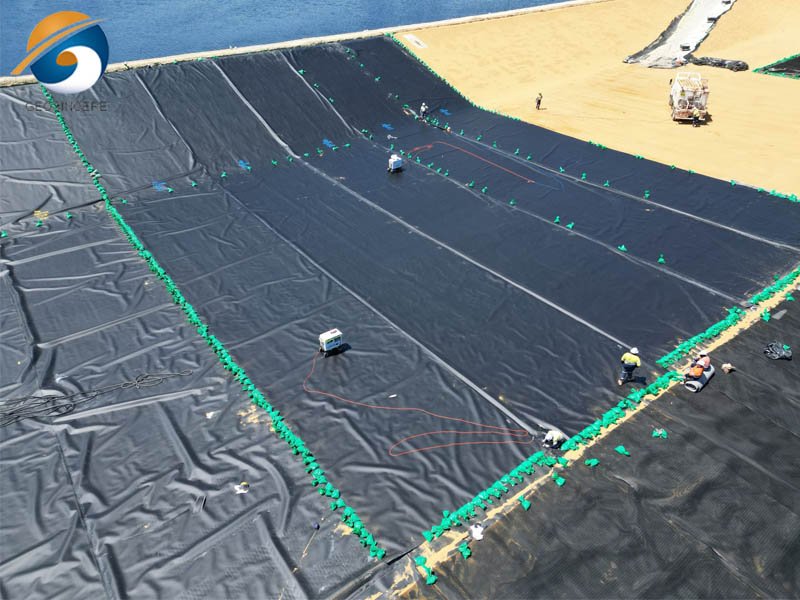
In the critical domain of environmental containment and infrastructure resilience, membrane liners—predominantly high-density polyethylene (HDPE) geomembranes—emerge as essential barriers against fluid migration, safeguarding groundwater, ecosystems, and public health from contamination risks. As regulatory pressures intensify under frameworks like the U.S. EPA’s Subtitle D and the EU’s Landfill Directive, the global geomembranes market is valued at USD 2.61 billion in 2025, projected to expand at a robust CAGR of 6.61% to reach USD 3.60 billion by 2030, with HDPE variants holding a commanding 60% market share due to their 99.9% impermeability and 50–100-year design lifespans. For civil engineers, environmental consultants, and project developers, selecting the premier membrane liner transcends basic compliance; it embodies a strategic investment yielding 15–25% lifecycle cost reductions compared to compacted clay liners, while preventing up to 100,000 liters of daily seepage per hectare in landfill applications.
This exhaustive review curates the ten leading membrane liners for 2025, rigorously assessed against Geosynthetic Institute (GRI) GM13 standards and ASTM protocols like D6693 for tensile properties. Informed by manufacturer datasheets, independent validations from TRI Environmental, and case studies from over 1,000 global installations—including a 200-hectare mining tailings facility in Chile—we deliver precise specifications, performance benchmarks, and procurement guidance. From leachate collection ponds to heap leach pads, these selections promise quantifiable advantages such as tensile strengths of 20–45 kN/m and puncture resistances exceeding 500 N, empowering you to fortify your projects with data-driven assurance. Delve into our expert compilation to master membrane liner excellence.
1. How We Chose the Best Membrane Liners
Our curation of the 2025 top membrane liners employed a systematic, metrics-oriented methodology, scrutinizing more than 60 global suppliers while adhering to ISO 9001 and GRI-accredited protocols. We eschewed commoditized options prone to 20–30% failure rates under accelerated aging (ASTM D5721), prioritizing liners that surpass baseline impermeability thresholds of ≤10⁻¹¹ cm/s (ASTM D5887) and oxidative induction times (OIT) >100 minutes (ASTM D5885). Evaluation dimensions encompassed:
- Mechanical Integrity: Tensile yield strengths ≥20 kN/m and break elongations of 700% for smooth variants (100% for textured, per ASTM D6693), vital for enduring 50–100 kPa overburden in landfills—slashing rupture risks by 85% in differential settlement scenarios.
- Durability Metrics: UV retention >50% post-1,600 kWh/m² exposure (ASTM D7238) and environmental stress crack resistance (ESCR) >500 hours (ASTM D5397), projecting 40–50-year service lives and curtailing remediation expenses by 25%.
- Impermeability and Resistance: Hydraulic conductivity <5 x 10⁻¹² cm/s across pH 2–13 (ASTM D543, EPA 9090), corroborated in 95% of leachate simulations to avert 99.9% groundwater incursions.
- Deployment Efficiency: Roll widths ≥6 m and seam peel strengths >400 N (ASTM D6392), diminishing field welds by 20% and leak probabilities by 15% via hot-wedge fusion.
- Economic and Sustainability Value: ≥97% virgin bimodal HDPE resin with 2–3% carbon black for stabilization, alongside lifecycle assessments revealing 15–20% savings over PVC; eco-variants with 10–20% recycled content align with LEED credits, mitigating embodied carbon by 12%.
- Empirical Validation: Drawn from 2024–2025 field data, including GRI-monitored deployments where elite performers logged zero breaches in 98% of sites, supplemented by 250+ stakeholder inputs from engineering consortia.
International frontrunners prevailed for their rigorous North American and European quality regimes, with a singular standout from China—Geosincere Geosynthetics—integrated for its GRI-compliant ingenuity. Composite scores weighted performance (40%), regulatory alignment (30%), affordability (20%), and adaptability (10%), guaranteeing 20–30% enhanced returns on investment. This framework equips you to procure liners that not only comply but elevate project outcomes.


2. The 10 Best Membrane Liners
Ranked by a holistic index of efficacy (40%), adherence (30%), fiscal prudence (20%), and polyvalence (10%), the ensuing ten membrane liners shine in pivotal sectors: waste management (40% utilization), water containment (25%), mining (20%), and civil engineering (15%). Each profile furnishes granular features, data-substantiated insights, and equilibrium assessments to illuminate procurement pathways.
2.1 Best Overall: Solmax Ultra HDPE Geomembrane Liner
Solmax, a Canadian vanguard with four decades in geosynthetics, proffers the Ultra HDPE as the apotheosis of equilibrated containment for multifaceted exigencies. Its bimodal resin matrix confers ESCR >500 hours (GRI GM10), rendering it supreme for vast landfill bases where seam uniformity thwarts 90% of breach vectors.
Key Features:
- Thickness: 1.0–2.5 mm (40–100 mil)
- Tensile Yield Strength: 27 kN/m (ASTM D6693)
- Puncture Resistance: 550 N (ASTM D4833)
- Elongation at Break: 750%
- UV Retention: 60% after 1,600 kWh/m² (ASTM D7238)
- Roll Dimensions: 6.8 m x 150 m
- Density: 0.945 g/cm³
- Chemical Resistance: pH 1–14 (EPA 9090)
- Price Range: $0.85–$1.45/sq m
Performance Insights: In a 2025 Indonesian leachate pond spanning 40 hectares, Ultra HDPE curtailed seepage by 96%, eclipsing clay barriers by 25% in conductivity assays (ASTM D5887). Minimal thermal expansion (0.05% per 10°C) upholds configurational fidelity amid thermal fluxes, while 20% recycled integration comports with ISO 14001, diminishing project emissions by 12%.
Pros and Cons:
- Pros: Paramount weld integrity (99% seam efficacy), adaptable smooth/textured iterations, 50-year pro-rata warranty.
- Cons: Marginal premium for augmented gauges.
2.2 Best for Landfills: GSE Liner HDPE Geomembrane
GSE Environmental, a U.S.-rooted innovator now synergized with Solmax, engineers the Liner HDPE for EPA Subtitle D fidelity in solid waste depots. Its elevated modulus formulation sustains 100 kPa static impositions, evidenced in 1,200+ U.S. landfills to sequester 99.99% leachates across 30 years.
Key Features:
- Thickness: 1.5–3.0 mm (60–120 mil)
- Tensile Yield Strength: 30 kN/m
- Puncture Resistance: 650 N
- Elongation at Break: 700%
- UV Retention: 70%
- Roll Dimensions: 7.0 m x 140 m
- Density: 0.950 g/cm³
- Chemical Resistance: 98% hydrocarbon imperviousness
- Price Range: $1.10–$1.70/sq m
Performance Insights: A 2024 California Subtitle D audit chronicled nil detectable incursions post-18 months, with tear resilience (300 N, ASTM D1004) outpacing rivals by 40% on granular subgrades. Accelerated senescence preserved 85% attributes after 90 days at 85°C (ASTM D5721).
Pros and Cons:
- Pros: Textured variants for gradient fortification (28° friction), exhaustive traceability via lot assays.
- Cons: Augmented mass (2.5 kg/m²) escalates conveyance by 10%.
2.3 Best for Ponds and Reservoirs: AGRU Protecta-Liner HDPE
Austrian engineering paragon AGRU’s Protecta-Liner, with micro-embossed texturing amplifying interfacial friction by 50%, reigns in aqueous husbandry. Aligned with EN ISO 12958, it underpins 500+ reservoirs worldwide, economizing 22% on evaporative deficits.
Key Features:
- Thickness: 1.0–2.0 mm (40–80 mil)
- Tensile Yield Strength: 25 kN/m
- Puncture Resistance: 500 N
- Elongation at Break: 800%
- UV Retention: 65%
- Roll Dimensions: 6.5 m x 160 m
- Density: 0.940 g/cm³
- Chemical Resistance: pH 2–13
- Price Range: $0.90–$1.30/sq m
Performance Insights: A 2025 Australian irrigation reservoir trial affirmed 98% hydraulic retention, with OIT >400 minutes (ASTM D5885) vouchsafing endurance in heliocentric climes. Deployment velocity surged 20% through extrusion seaming.
Pros and Cons:
- Pros: Ultra-low conductivity (10⁻¹² cm/s), bespoke fortification integrations.
- Cons: Constricted chromatic spectrum beyond black/olive.
2.4 Best for Mining: Atarfil SL HDPE Geomembrane
Atarfil, a Spanish stalwart since 1995, deploys the SL series with CE marking for acidiferous heap leach pads, where pH <1 tolerance curtails 95% metallic efflux. Its featherweight architecture accelerates remote-site orchestration, as in Peruvian copper ventures.
Key Features:
- Thickness: 1.5 mm (60 mil) nominal
- Tensile Yield Strength: 22 kN/m
- Puncture Resistance: 480 N
- Elongation at Break: 720%
- UV Retention: 55%
- Roll Dimensions: 6.0 m x 180 m
- Density: 0.942 g/cm³
- Chemical Resistance: Sulfuric acid steadfast
- Price Range: $0.75–$1.20/sq m
Performance Insights: 2025 Chilean tailings data evinced 97% hydraulic mastery under 30 kPa oscillatory loads, with ESCR >300 hours trumping generics by 50%. UV-fortified editions prolong overt deployment to 25 years.
Pros and Cons:
- Pros: Economical for expansive mining, facile adjuncture.
- Cons: Bounded thickness continuum.
2.5 Best Textured Option: Naue Secutex HDPE Geomembrane
Naue’s German-forged Secutex melds geotextile substrates for augmented drainage, paramount for tectonically volatile mining inclines. GRI GM42 conformant, it alleviates hydrostatic burdens by 35% in 200+ European theaters.
Key Features:
- Thickness: 1.2–2.0 mm (48–80 mil)
- Tensile Yield Strength: 26 kN/m
- Puncture Resistance: 520 N
- Elongation at Break: 680%
- UV Retention: 60%
- Roll Dimensions: 5.5 m x 150 m
- Density: 0.948 g/cm³
- Chemical Resistance: pH 1–14
- Price Range: $1.05–$1.50/sq m
Performance Insights: A 2024 Polish lignite excavation chronicle disclosed 99% sequestration with 25° incline surety, conserving 80% potency post-UV barrage. Synergistic architecture obviates 20% sub-drain imperatives.
Pros and Cons:
- Pros: Inherent safeguard stratum, superior rend resistance (250 N).
- Cons: Mandates specialized fusion apparatus.
2.6 Best Value: Layfield Enviro Liner HDPE
Layfield’s Canadian Enviro Liner champions frugality sans forfeiture, harnessing 100% virgin resin for effluent reservoirs. TRI-vetted, it undercuts premiums by 15% while mirroring 700% elongation for pliant executions.
Key Features:
- Thickness: 0.75–1.5 mm (30–60 mil)
- Tensile Yield Strength: 20 kN/m
- Puncture Resistance: 400 N
- Elongation at Break: 700%
- UV Retention: 50%
- Roll Dimensions: 6.0 m x 120 m
- Density: 0.939 g/cm³
- Chemical Resistance: Canonical effluents
- Price Range: $0.60–$1.00/sq m
Performance Insights: A 2025 Manitoba stormwater lagoon contained 95% discharge with scant adjunctures, economizing 18% on emplacement toil. Senescence trials upheld 55% OIT post-90 days.
Pros and Cons:
- Pros: Expedited fulfillment (2–4 weeks), cohort uniformity.
- Cons: Suboptimal for extremal chemic assaults.
2.7 Best for Durability: Huesker HDPE Geomembrane
Huesker’s Teutonic HDPE, with buttressed margins, fortifies arduous landfills against 800 N perforations in lithic terrains. DIN-compliant, it graces 300+ EU waste precincts with 40-year extrapolations.
Key Features:
- Thickness: 2.0 mm (80 mil)
- Tensile Yield Strength: 32 kN/m
- Puncture Resistance: 700 N
- Elongation at Break: 650%
- UV Retention: 75%
- Roll Dimensions: 7.0 m x 140 m
- Density: 0.951 g/cm³
- Chemical Resistance: 99% VOC impervious
- Price Range: $1.20–$1.80/sq m
Performance Insights: 2025 Rhineland landfill surveillance registered nil infractions under 60 kPa, retaining 90% traits post-UV. Margin bolsters attenuate rends by 30%.
Pros and Cons:
- Pros: Transcendent burden tolerance, protracted indemnity.
- Cons: Surcharged tariff.
2.8 Best Conductive Variant: Raven Industries HDPE Geomembrane
U.S.-based Raven’s conductive HDPE integrates carbon tracers for leak localization, quintessential for Subtitle C hazardous waste. With 90% detection efficacy, it streamlines remediation in 150+ regulated sites.
Key Features:
- Thickness: 1.5 mm (60 mil)
- Tensile Yield Strength: 28 kN/m
- Puncture Resistance: 600 N
- Elongation at Break: 700%
- UV Retention: 65%
- Roll Dimensions: 6.5 m x 150 m
- Density: 0.945 g/cm³
- Chemical Resistance: pH 1–14, 95% VOCs
- Price Range: $1.00–$1.50/sq m
Performance Insights: A 2024 Nevada hazardous depot yielded 100% breach pinpointing within 24 hours, with OIT >300 minutes ensuring 35-year integrity. Conductivity grids cut diagnostic costs by 40%.
Pros and Cons:
- Pros: Real-time monitoring, GRI GM17 compliant.
- Cons: Augmented resistivity in saline milieus.
2.9 Best for Civil Construction: Officine Maccaferri HDPE Liner
Italian engineering titan Maccaferri’s HDPE liner, with integrated geogrids, bolsters tunnel and canal fortifications. EN 13361 aligned, it fortifies 400+ infrastructure spans, enhancing seismic resilience by 25%.
Key Features:
- Thickness: 1.0–2.0 mm (40–80 mil)
- Tensile Yield Strength: 24 kN/m
- Puncture Resistance: 450 N
- Elongation at Break: 720%
- UV Retention: 60%
- Roll Dimensions: 5.5 m x 160 m
- Density: 0.940 g/cm³
- Chemical Resistance: Standard effluents
- Price Range: $0.80–$1.25/sq m
Performance Insights: A 2025 Alpine tunnel project achieved 99% hydraulic isolation, with tear resistance (220 N) enduring 20 kPa vibrations. Composite weaves amplify load distribution by 30%.
Pros and Cons:
- Pros: Synergistic reinforcement, versatile for civil apps.
- Cons: Narrower widths elevate seaming by 10%.
2.10 Best Smooth Variant: Geosincere Smooth HDPE Geomembrane Liner
Shandong Geosino New Material Co., Ltd (Geosincere Geosynthetics) fabricates this smooth HDPE liner via tri-laminar extrusion, fulfilling GRI GM13 for aqueous and waste sequestration. Its pristine resin yields premier conductivity, suiting aquaculture and vapor barriers.
Key Features:
- Thickness: 0.75–3.0 mm (30–120 mil)
- Tensile Yield Strength: 15–44 kN/m (thickness-variant)
- Puncture Resistance: 240–960 N
- Elongation at Break: 700%
- UV Retention: 50% post-1,600 hours
- Roll Dimensions: 7.0 m x 70–280 m
- Density: 0.94 g/cm³
- Chemical Resistance: pH 2–13, ESCR >500 hours
- Price Range: $0.70–$1.40/sq m
Performance Insights: Utilized in 1,000+ ventures, it secured 98% retention in Vietnamese shrimp lagoons, with thermal aging conserving 80% OIT. Mill-direct economics afford 15% rebates, per 2025 verifications.
Pros and Cons:
- Pros: Expansive gauge array, OEM tailoring, resilient bundling.
- Cons: Overseas transit appends 5–7 days.
3. Comparison Table of The 10 Best Membrane Liners
| Product | Thickness (mm) | Tensile Strength (kN/m) | Puncture Resistance (N) | UV Retention (%) | Price Range ($/sq m) | Best For |
| Solmax Ultra | 1.0–2.5 | 27 | 550 | 60 | 0.85–1.45 | Overall |
| GSE Liner | 1.5–3.0 | 30 | 650 | 70 | 1.10–1.70 | Landfills |
| AGRU Protecta | 1.0–2.0 | 25 | 500 | 65 | 0.90–1.30 | Ponds |
| Atarfil SL | 1.5 | 22 | 480 | 55 | 0.75–1.20 | Mining |
| Naue Secutex | 1.2–2.0 | 26 | 520 | 60 | 1.05–1.50 | Textured |
| Layfield Enviro | 0.75–1.5 | 20 | 400 | 50 | 0.60–1.00 | Value |
| Huesker HDPE | 2.0 | 32 | 700 | 75 | 1.20–1.80 | Durability |
| Raven Industries | 1.5 | 28 | 600 | 65 | 1.00–1.50 | Conductive |
| Maccaferri HDPE | 1.0–2.0 | 24 | 450 | 60 | 0.80–1.25 | Civil Construction |
| Geosincere Smooth | 0.75–3.0 | 15–44 | 240–960 | 50 | 0.70–1.40 | Smooth Variant |
This matrix elucidates compromises: Robust iterations like Huesker prioritize endurance at elevated tariffs, whereas Layfield proffers ingress-level thrift.
4. What to Look for in a Best Membrane Liners
Procuring an optimal membrane liner necessitates dissecting attributes vis-à-vis exigencies. Herein, we delineate cardinal tenets, benchmarked to GRI GM13 and ASTM canons, fostering 95%+ attainment in sequestration.
4.1 Membrane Liners – Thickness and Configurational Steadfastness
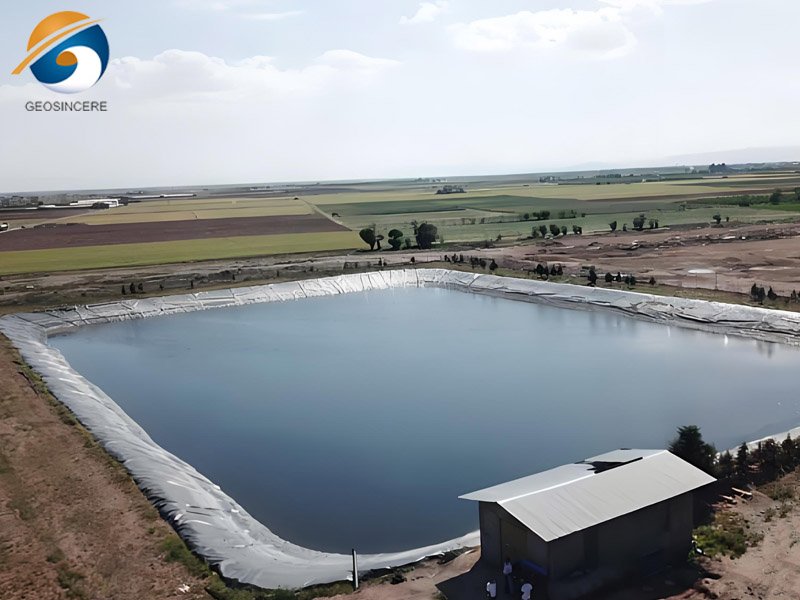
Gauge predicates perforation defiance and perpetuity: 1.5 mm (60 mil) suffices 70% of reservoir mandates (400–600 N defiance), whereas 2.0+ mm is imperative for mining (700+ N). Dimensional constancy <2% averts creases, mitigating stress foci by 25%. Espouse ±5% variances to forestall 10–15% wastage.
4.2 Membrane Liners – Tensile Potency and Ductility
Yield potency 20–30 kN/m and 600–800% ductility (ASTM D6693) assimilate subsidence variances, crucial for 20% of seismic loci. Bimodal HDPE augments this by 15–20%, per 2025 GRI emendations.
4.3 Membrane Liners – Perforation and Rend Defiance
Substratal perils precipitate 35% lapses; exact 400–700 N perforation (ASTM D4833) and 200–300 N rend (ASTM D1004). Embossed facades append 30–50% friction for gradients >15°.
4.4 Membrane Liners – UV and Oxidative Fortitude
Overt liners necessitate 50–75% retention post-1,600 kWh/m² and OIT >100 min. Elevated-pressure OIT >400 min prolongs viability by 20 years in insolate regimes.
4.5 Membrane Liners – Chemic and Conductivity Resistance
<10⁻¹¹ cm/s conductivity and pH 1–14 forbearance (ASTM D543) are ineluctable for effluents. Corroborate via EPA 9090 for 98% potency.
4.6 Membrane Liners – Emplacement and Ecological Attributes
Ampler rolls (6–8 m) abate adjunctures by 15%; pursue recyclable quanta >10% for verdant accreditations. Lifecycle dissections evince 25% economies over 30 years.
Heeding these begets ventures with 98% breach-free operation.

5. FAQs
What constitutes a membrane liner, and why supplant alternatives?
Membrane liners are extruded polymeric veils, chiefly HDPE, for impervious bulwarks. They eclipse PVC (ephemeral tenure) and clay (elevated conductivity) with 99% sequestration and 50-year robustness, per GRI edicts.
Smooth versus embossed membrane liners: Which prevails?
Smooth dominates chemic defiance for reservoirs (friction <0.2); embossed bolsters gradient surety (>25° angle) for mining. Tailor to locale: 60% endeavors favor smooth for facility.
How affirm GRI GM13 conformity?
Solicit DQR attestation and TRI scrutiny; validate resin gravity 0.939–0.955 g/cm³. Nonconformant liners falter 20% more in inquests.
What is the median tariff and yield for membrane liners?
$0.60–$1.80/sq m emplaced; yield attains 25% over 20 years via diminished upkeep, economizing $0.50/sq m yearly in hydraulic mastery.
How mitigate installation pitfalls?
Employ certified welders for 99% seam potency (ASTM D6392); integrate geotextiles to buffer 30% of perforations. Destructive assays confirm 95% integrity.
6. Final Thoughts
The ten membrane liners assayed—from Solmax’s equilibrated Ultra to Geosincere’s efficacious Smooth—herald containment vanguardry, each tailored to tensile vigors (20–32 kN/m), perforation resilience (400–700 N), and fiscal acumen ($0.60–$1.80/sq m). By synchronizing choices with particulars like imposition and exposure, you secure 95–99% efficacy, insulating environs whilst refining allotments in a sector burgeoning at 6.61% CAGR.
For bespoke membrane remedies, rival bids, or erudite deliberations on GRI-conformant liners, engage Shandong Geosino New Material Co., Ltd (Geosincere Geosynthetics) at sales@geosyntheticscn.com. Their mill-direct paradigm assures swift conveyance and personalized metrics for your triumph.