In the evolving landscape of pond construction and water management, bentonite clay pond liner stand out as a natural, eco-friendly alternative to synthetic materials like HDPE geomembranes. Derived from volcanic ash, these liners leverage the unique swelling properties of sodium bentonite to create an impermeable barrier, effectively sealing ponds against leakage while promoting environmental sustainability. Ideal for applications ranging from recreational koi ponds to large-scale aquaculture facilities and irrigation reservoirs, bentonite liners offer self-healing capabilities and minimal chemical impact, making them a preferred choice for environmentally conscious projects.
The global bentonite market, valued at approximately USD 7.21 billion in 2025, is forecasted to expand to USD 9.45 billion by 2032, reflecting a compound annual growth rate (CAGR) of 4.0%, fueled by rising demand in water conservation, agriculture, and environmental remediation. Within the geosynthetics segment, geosynthetic clay liners (GCLs) incorporating bentonite are projected to grow from USD 461 million in 2025 to USD 604 million by 2031 at a CAGR of 4.7%. Cost-wise, bentonite clay pond liners typically range from $0.50 to $3.00 per square foot for materials alone, with full installation pushing totals to $1.00 to $6.50 per square foot, depending on soil type, application method, and project scale. This in-depth guide, informed by industry benchmarks and manufacturer insights, breaks down these costs to empower pond owners, contractors, and engineers with precise budgeting tools. At Shandong Geosino New Material Co., Ltd. (Geosincere Geosynthetics), we deliver premium bentonite solutions engineered for superior performance and value. Read on to explore specifications, influencing factors, and strategies for optimizing your investment.
1. What Are Bentonite Clay Pond Liner?
Bentonite clay pond liners are natural sealing systems composed primarily of sodium bentonite, a highly absorbent clay mineral that expands up to 15 times its dry volume upon hydration. This expansion forms a low-permeability gel-like barrier (hydraulic conductivity ≤ 1 × 10⁻⁹ m/s), preventing water seepage while allowing flexibility in irregular pond geometries. Unlike passive synthetic liners, bentonite operates as an “active” system, requiring confinement—such as overlying soil or geotextile—to achieve optimal sealing through compressive forces. Sourced from major deposits in Wyoming, Texas, and India, bentonite liners are non-toxic, recyclable, and compliant with standards like ASTM D5887 for swell index (>24 mL/2g) and ASTM D6496 for GCL peel adhesion.
Key Properties and Specifications
Bentonite liners excel due to their engineered properties, tailored for diverse environmental conditions:
- Swelling Capacity: Sodium bentonite swells 12–15 times, achieving a bulk density of 850–1,200 kg/m³ when hydrated, ensuring a self-sealing matrix that adapts to minor punctures or shifts.
- Permeability and Durability: Hydraulic conductivity <10⁻¹¹ cm/s; service life of 20–50 years in submerged applications, with resistance to freeze-thaw cycles (up to 100 cycles without degradation) and chemical exposure (pH 4–10).
- Thickness and Coverage: For granular forms, effective layer thickness post-hydration: 0.1–0.5 inches; GCL variants: 5–10 mm dry, expanding to 8–15 mm. Roll widths: 1–6 meters; coverage rates: 1–6 lbs/sq ft (4.9–29.3 kg/m²) based on soil.
- Environmental Compatibility: 100% biodegradable components; zero VOC emissions; supports aquatic life with neutral pH (7–9) and no leaching of heavy metals.
These parameters position bentonite liners as a robust choice for sites with variable water tables or seismic activity, where flexibility outperforms rigid synthetics.
Types of Bentonite Clay Pond Liner
Selecting the right type hinges on pond size, soil profile, and budget. Common variants include:
- Granular Bentonite: Loose pellets or chips (3–10 mm diameter) for broad application; ideal for DIY retrofits. Swell index: 120–150 mL/2g; cost: $0.04–$0.12 per lb. Best for large, excavated ponds over 1 acre, where mixing with native soil (30% bentonite to 70% soil ratio) enhances sealing.
- Powdered Bentonite: Fine powder (<200 mesh) for precise sprinkling; higher dust potential but faster hydration. Bulk density: 800–900 kg/m³; application rate: 2–4 lbs/sq ft for silty soils. Suited for small ornamental ponds, with costs at $0.05–$0.15 per lb.
- Bentonite Blankets or Mats: Pre-formed sheets (e.g., 4–6 ft wide rolls) with bentonite sandwiched between geotextiles; needle-punched for integrity. Peel strength: >360 N; thickness: 4–6 mm. Premium for sloped or irregular sites, priced at $1.00–$2.50 per sq ft.
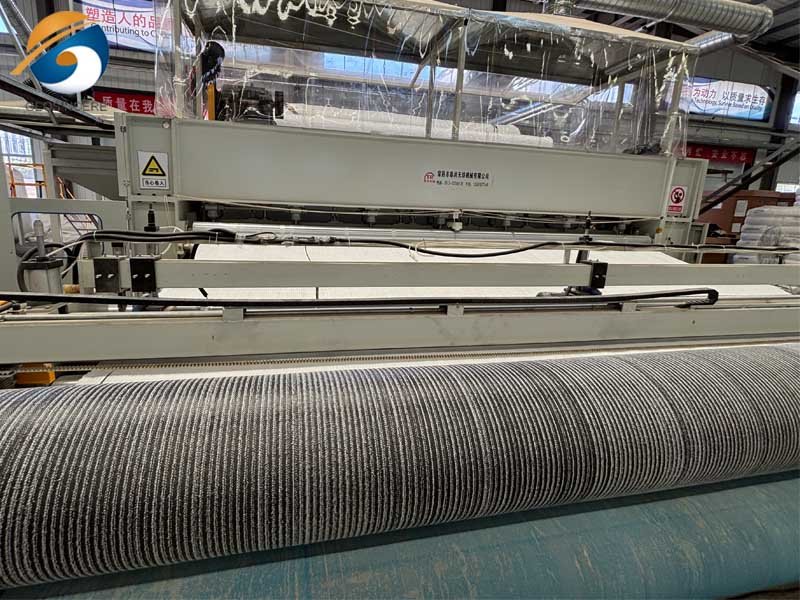
- Geosynthetic Clay Liners (GCLs): Factory-reinforced composites (bentonite between geotextile/scrim); hydraulic conductivity ≤5 × 10⁻¹⁰ m/s. Roll length: 30–50 m; tensile strength: 5–10 kN/m. Engineered for high-load applications like mining tailings ponds, at $1.50–$5.00 per sq ft.
Geosincere Geosynthetics offers all types, certified to ISO 9001 and ASTM standards, ensuring consistent performance.
Applications and Benefits
Bentonite liners shine in water-retention scenarios, with proven efficacy in global projects:
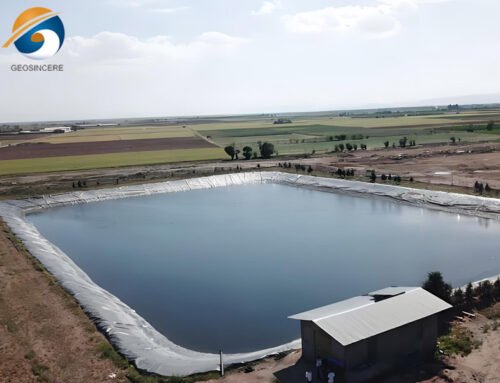
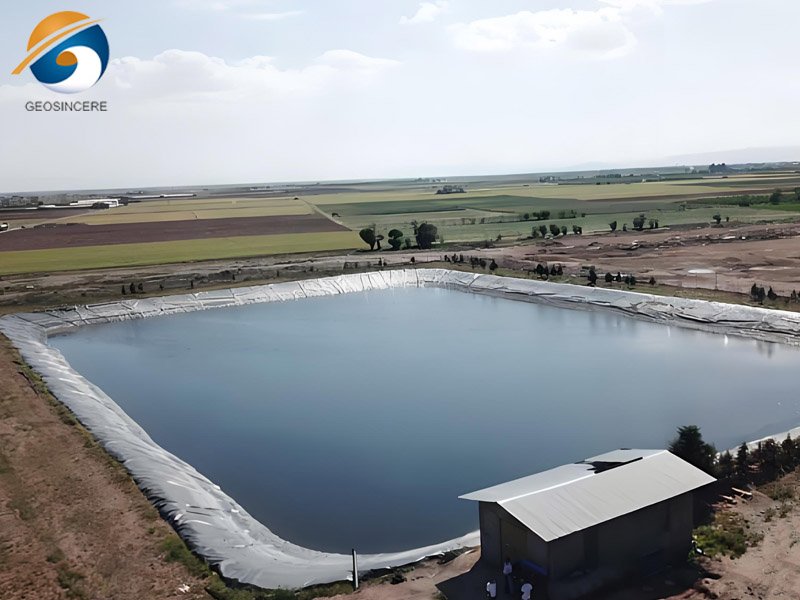
- Aquaculture and Fish Ponds: Seals koi or tilapia habitats without synthetic residues; reduces evaporation by 90–95%.
- Irrigation and Reservoirs: Minimizes seepage in agricultural setups; a Wyoming case study showed 85% water savings over unsealed ponds.
- Stormwater and Wastewater: Compliant with EPA guidelines for detention basins; self-healing mitigates root penetration.
- Recreational and Wildlife Ponds: Enhances biodiversity; 20–30% lower maintenance than EPDM liners.
Benefits include eco-friendliness (biodegradable vs. plastic waste from synthetics), cost savings (up to 40% less aggregate needed), and longevity (self-repairs minor damages, extending life by 15–25 years).
2. How Much Does a Bentonite Clay Pond Liner Cost?
The upfront cost of a bentonite clay pond liner varies significantly, but averages $0.50–$3.00 per square foot for materials, escalating to $1.00–$6.50 installed for a typical 1/4-acre pond (total $2,500–$12,000). These figures, drawn from 2025 market analyses, exclude permitting ($200–$1,000) but encompass core variables like soil permeability and method. For a 1-acre project (43,560 sq ft), expect $21,780–$130,680 total, with materials at 40–60% of the budget. Below, we dissect key influencers with granular data to facilitate accurate forecasting.
2.1 Bentonite Clay Pond Liner Cost – Material Type
Material form dictates 25–45% of expenses, as processing levels affect pricing and handling.
- Granular Sodium Bentonite: Dominant for cost-sensitive projects (70% market share); particle size 3–10 mm, moisture content <12%. Cost: $0.04–$0.12 per lb ($80–$240 per ton), translating to $0.04–$0.72 per sq ft at 1–6 lbs/sq ft rates. Advantage: Easy spreading; example: Lonestar Minerals’ premium grade at $420 for 3,000 lbs retail, ideal for 5,000 sq ft ponds ($200–$1,080 materials).
- Powdered Bentonite: For fine-tuned applications; swell rate 140 mL/2g. Pricing: $0.05–$0.15 per lb ($100–$300/ton), or $0.05–$0.90/sq ft. Suited for retrofits; a 10,000 sq ft irrigation pond requires 20–40 tons ($2,000–$12,000).
- Bentonite Mats/Blankets: Geotextile-encased for uniformity; mass per unit area 3.5–5 kg/m². Cost: $1.00–$2.50/sq ft, premium for erosion-prone sites. Geosincere’s mats offer 20% higher shear strength (8 kN/m) for $1.20–$2.20/sq ft.
- Geosynthetic Clay Liners (GCLs): Advanced composites; overlap strength >90%. At $1.50–$5.00/sq ft, they command 15% market premium but reduce installation time by 30%, netting savings on labor-intensive jobs.
Comparative: Granular saves 50–70% vs. GCLs but demands precise soil mixing; for clay-rich bases, granular yields 25% lower total ownership costs over 20 years.
2.2 Bentonite Clay Pond Liner Cost – Application Rate and Thickness
Dosage, measured in lbs/sq ft, scales with soil type and pond depth, comprising 30–50% of material outlay.
- Low Rate (1–2 lbs/sq ft): For clayey soils (permeability <10⁻⁶ cm/s); effective thickness 0.1–0.2 inches post-swell. Cost: $0.04–$0.24/sq ft; suitable for stable, low-leakage sites like garden ponds.
- Medium Rate (3 lbs/sq ft): Silty soils; 0.2–0.3 inches. $0.12–$0.36/sq ft; balances efficacy and economy for 1/2-acre recreational uses.
- High Rate (4–6 lbs/sq ft): Sandy/gravelly (permeability >10⁻⁴ cm/s); 0.3–0.5 inches. $0.20–$0.72/sq ft; essential for high-seepage zones, as in arid irrigation projects.
A soil test ($10–$20 DIY kit or $400 professional) optimizes rates, potentially cutting overuse by 20–30%. For a 20,000 sq ft pond, escalating from low to high rate adds $1,600–$10,800 but boosts retention by 40%.
2.3 Bentonite Clay Pond Liner Cost – Project Size and Scale
Scale leverages bulk discounts (10–30% for >10 tons), lowering per-unit costs for expansive designs.
- Small Ponds (<1/4 Acre, 5,000 sq ft): $2.50–$6.00/sq ft total due to fixed mobilization ($500–$1,500). Example: Ornamental koi pond at $1,250–$3,000.
- Medium Ponds (1/4–1 Acre, 10,000–43,560 sq ft): $1.50–$4.00/sq ft; economies reduce material to $0.30–$1.50/sq ft. A 1/4-acre aquaculture setup: $2,500–$12,000 installed.
- Large Reservoirs (>1 Acre): $1.00–$3.00/sq ft; bulk granular at $0.03–$0.10/lb shaves 20%. Texas 5-acre farm pond: $50,000–$150,000, with 15% savings via phased installation.
Depth factor: Ponds >10 ft deep add 10–15% for reinforced GCLs to counter hydrostatic pressure.
2.4 Bentonite Clay Pond Liner Cost – Installation Method and Labor
Installation drives 25–40% of totals, with methods varying in complexity and equipment needs.
- Sprinkle/Mix Method (DIY-Friendly): Broadcast bentonite, till into 4–6 inch soil layer, compact to 90–95% Proctor density. Labor: $0.20–$0.50/sq ft ($10–$20/hour Asia, $30–$50 North America); total for 1-acre: $8,712–$21,780. Steps: 1) Scarify subgrade; 2) Apply at 1–6 lbs/sq ft; 3) Hydrate slowly (1–2 inches/week); 4) Test permeability.
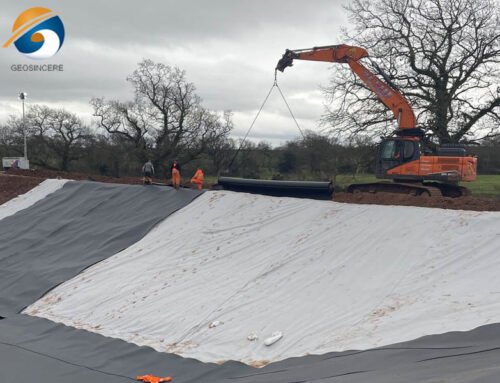
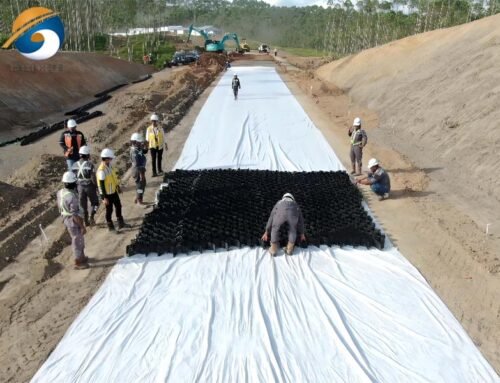
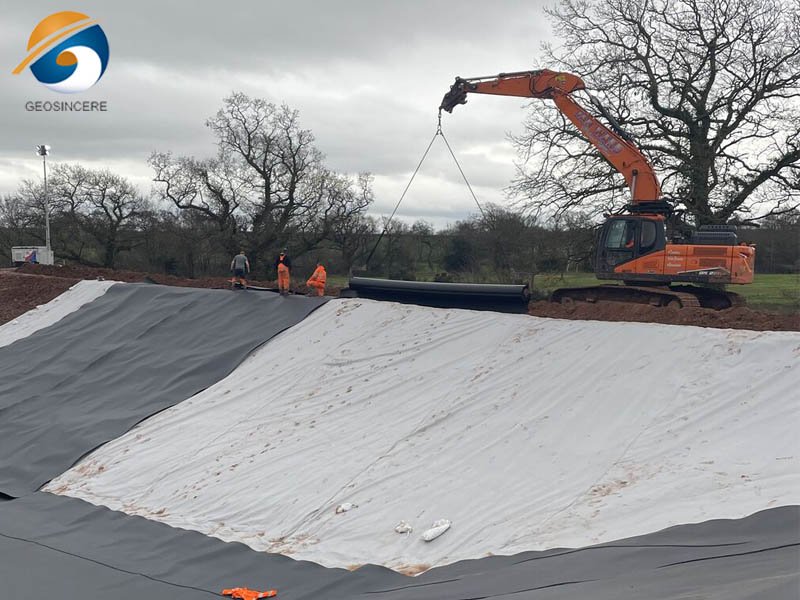
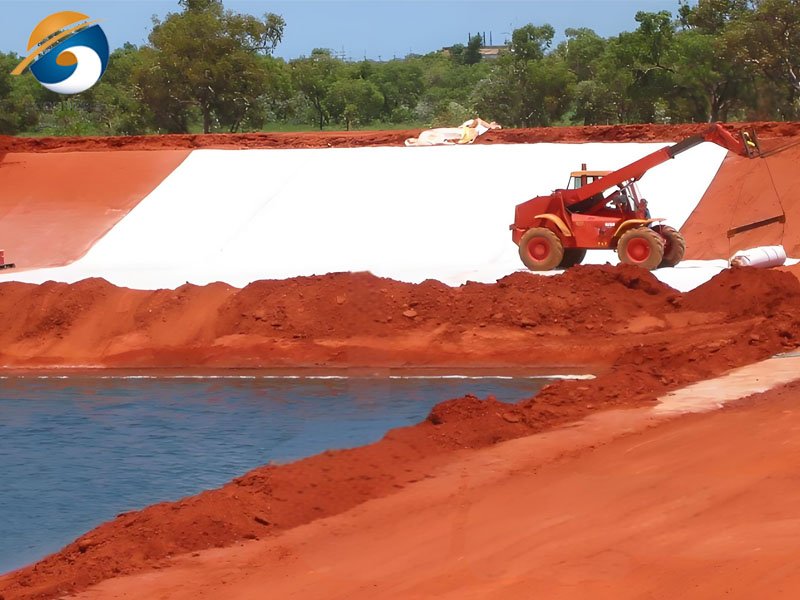
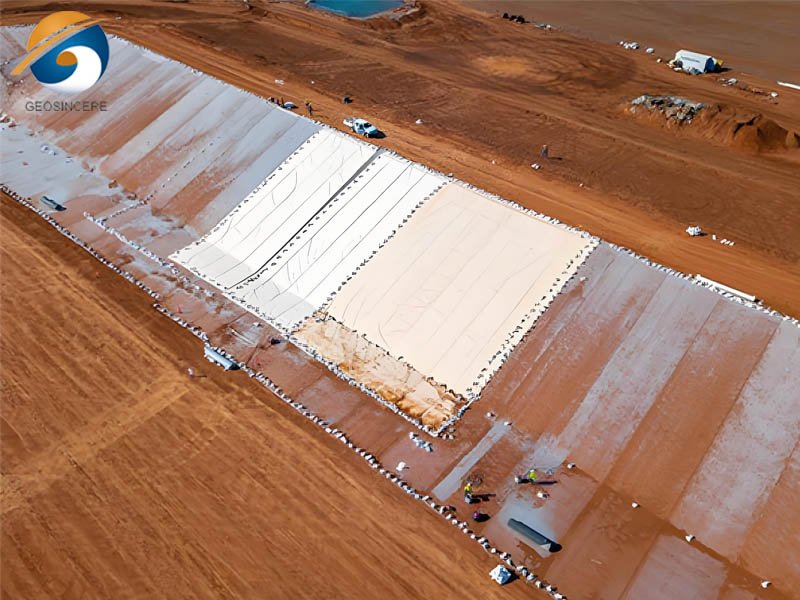
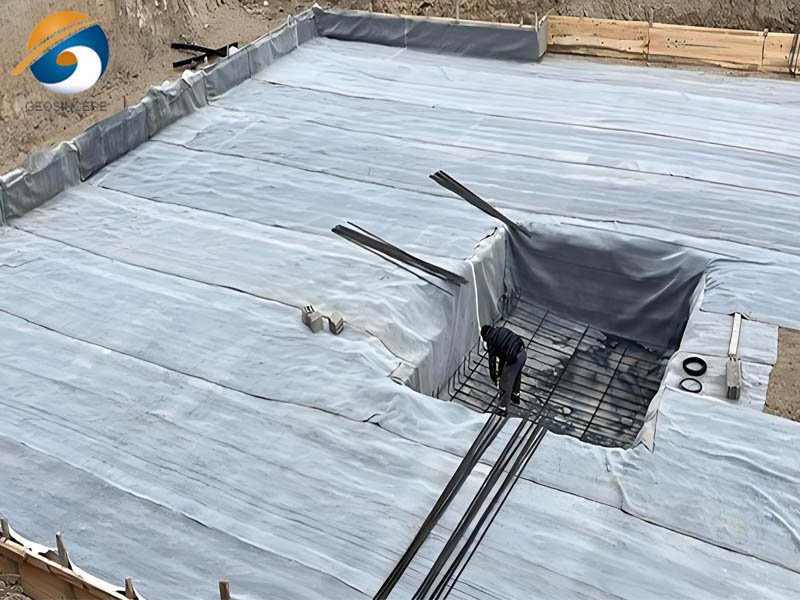
- Blanket Placement: Unroll mats over prepared base, overlap 12–18 inches, anchor with soil cover (6–12 inches). $0.50–$1.50/sq ft labor; faster (1–2 days/acre) but requires cranes for large rolls ($500–$2,000 rental).
- Professional vs. DIY: Pros add 20–30% ($1,000–$5,000 flat for small sites) but ensure 15% fewer failures; DIY suits <1/4 acre, saving $500–$2,000 but risking 10–20% rework.
Site prep (excavation/grading): $0.10–$0.30/sq ft; add geotextile underlay ($0.20–$0.50/sq ft) for sandy bases.
2.5 Bentonite Clay Pond Liner Cost – Soil Conditions and Site Preparation
Substrate profoundly impacts dosage and prep, with permeable soils inflating needs by 200–300%.
- Clayey/Impermeable Soils: Minimal rate (1 lb/sq ft); prep $0.10–$0.20/sq ft; total adder: negligible.
- Silty/Moderately Permeable: 3 lbs/sq ft; add lime amendment ($0.05–$0.15/sq ft) for stability; 20–40% cost uplift.
- Sandy/Highly Permeable: 5–6 lbs/sq ft; core trenches or drainage diversion ($500–$2,000); up to 50% premium, but GCLs mitigate by 25%.
Regional variances: Arid climates (e.g., Southwest US) add 10% for hydration controls; sloped sites (>5%) require terracing ($1,000–$5,000/acre).
2.6 Bentonite Clay Pond Liner Cost – Transportation, Logistics, and Quality
Logistics: 5–15% of budget; remote delivery $0.10–$0.30/sq ft for 50-lb bags or bulk trucks (20–40 tons/load).
Quality tiers: Premium sodium (95% montmorillonite) at +10–20% ($0.10–$0.20/lb extra) vs. calcium bentonite (lower swell, $0.02–$0.08/lb); virgin vs. processed adds 5–10% for purity.
2.7 Bentonite Clay Pond Liner Cost – Maintenance and Lifetime Expenses
Low upkeep: $0.05–$0.20/sq ft annually for inspections/regrading, vs. $0.50+ for synthetics. Lifespan: 20–50 years; self-healing cuts repairs 20–30% ($500–$2,000/incident). Lifecycle ROI: 150–200% over 25 years, per USDA pond sealing studies.
| Cost Component | Small Pond (5,000 sq ft) | Medium Pond (20,000 sq ft) | Large Pond (43,560 sq ft) |
| Materials | $250–$3,600 | $1,000–$14,400 | $2,178–$31,363 |
| Installation | $1,000–$2,500 | $4,000–$10,000 | $8,712–$21,780 |
| Total | $1,250–$6,100 | $5,000–$24,400 | $10,890–$53,143 |
3. How to Choose the Right Bentonite Clay Pond Liner
Navigating options requires aligning specs with site demands for optimal value.
3.1 Bentonite Clay Pond Liner – Assess Project Requirements
Match to load/soil: Light recreational (granular, 1–2 lbs/sq ft, $0.50–$1.50/sq ft); heavy aquaculture (GCLs, 4–6 lbs/sq ft, $2.00–$4.00/sq ft). Factor depth (add 10% for >8 ft) and traffic (reinforced for livestock).
3.2 Bentonite Clay Pond Liner – Prioritize Quality and Certifications
Opt for ASTM D5084-compliant products with >95% sodium content; Geosincere’s lines feature verified swell indices, reducing failure risk by 25%.
3.3 Bentonite Clay Pond Liner – Evaluate Installation Needs
DIY for small scales (tools: tiller $200/day); pros for >1/2 acre to achieve 95% compaction, saving 15–20% long-term.
3.4 Bentonite Clay Pond Liner – Consider Long-Term Costs and Sustainability
Thicker applications extend life by 20%; eco-variants cut carbon by 30% vs. PVC. Use AASHTO tools for ROI projections.
3.5 Bentonite Clay Pond Liner – Compare Suppliers
Benchmark Geosincere against globals; request samples for aperture/swell tests. Bulk quotes save 15–25%.
4. Industry Trends Affecting Bentonite Clay Pond Liner Costs
2025 trends signal moderate inflation (3–5%) offset by innovations. The GCL submarket’s 7.1% CAGR to $791.7 million by 2035 underscores demand for hybrid systems (bentonite + biopolymers, +10% cost but 20% better UV resistance). Sustainability drives 15% adoption rise in aquaculture ($320B market), with recycled geotextiles trimming 5–10%. Supply chain efficiencies from Asian hubs (e.g., China/India) cap rises, while IoT monitoring adds $0.05–$0.10/sq ft but slashes maintenance 20%. Vs. geomembranes, bentonite’s natural appeal grows 10% in green regs, despite 20–30% higher initial outlay for GCLs.
5. Conclusion
Bentonite clay pond liners offer a compelling blend of affordability ($0.50–$3.00/sq ft materials) and performance, with totals for a 1-acre project at $10,890–$53,143 influenced by soil, method, and scale. Their self-healing, eco-credentials, and 20–50-year durability provide superior ROI over synthetics, especially in sustainable designs. By prioritizing quality and site assessment, you can achieve leak-free retention while minimizing environmental impact.
For tailored quotes and expert guidance, contact Shandong Geosino New Material Co., Ltd. (Geosincere Geosynthetics) at sales@geosyntheticscn.com. Our premium bentonite solutions, backed by rigorous testing, ensure your pond thrives—request a free consultation today.