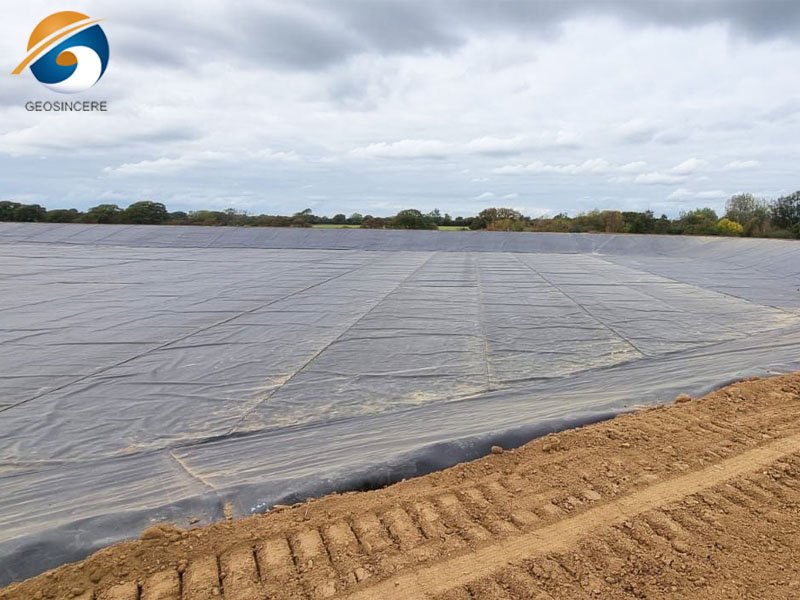
Geotextile membranes, versatile permeable geosynthetics, are revolutionizing civil engineering, environmental remediation, and infrastructure resilience by enabling effective soil separation, filtration, reinforcement, drainage, and erosion mitigation. Fabricated from synthetic polymers such as polypropylene (PP) or polyester (PET), or natural fibers like coir and jute, these fabrics enhance project durability while slashing costs by 20–40% relative to conventional aggregates. The global geotextile market, valued at USD 7.91 billion in 2024, is anticipated to expand to USD 15.02 billion by 2034, achieving a compound annual growth rate (CAGR) of 6.7%—propelled by infrastructure outlays exceeding USD 9.5 trillion by 2030 and a surge in sustainable development initiatives. Geotextile membrane prices in 2025 typically fluctuate between USD 0.15–7.50 per square meter, excluding installation, with non-woven PP variants at USD 0.15–3.00/m² and woven PET at USD 0.30–7.50/m², modulated by variables like fabric weight, material grade, and procurement volume.
This exhaustive resource furnishes data-driven analysis, technical benchmarks, and actionable methodologies to equip civil engineers, contractors, and procurement professionals with the acumen to navigate pricing intricacies and secure value-driven selections. From lightweight filtration layers to robust reinforcement grids, mastering these economics fosters resilient, economical implementations. Shandong Geosino New Material Co., Ltd. (Brand: Geosincere), situated in Taian City, Shandong Province, China, excels in fabricating ASTM- and ISO-compliant geotextile membranes, yielding annual outputs surpassing 24,000 tons for distribution across 60+ nations. Our bespoke offerings, incorporating 15–25% recycled content, afford substantial economies. Engage our specialists for bespoke quotations and technical advisory services now.
1. What Is Geotextile Membrane?
Geotextile membranes, synonymous with geotextile fabrics or geofabrics, constitute engineered permeable textiles interfacing with soil, aggregate, or geotechnical matrices to execute functions encompassing separation, filtration, reinforcement, drainage, and protection. Diverging from impermeable geomembranes, these textiles permit hydraulic flow while impeding particulate migration, averting intermixing or occlusion that undermines structural efficacy. Exhibiting service lives of 20–100 years in subsurface deployments, geotextile membranes surpass gravel by 30–50% in operational efficiency and ecological footprint, curtailing aggregate mining by up to 40%.
1.1 Materials and Manufacturing Processes
Geotextile membranes derive chiefly from synthetic polymers, commanding 90–95% market penetration for their resilience to biodegradation, chemicals, and ultraviolet exposure. Polypropylene (PP), securing 65% dominance, proffers affordability (USD 1,300 per metric ton in 2025) and hydrophobicity, rendering it optimal for drainage regimes. Polyester (PET) garners 20%, delivering augmented tensile capacities yet incurring a 10–15% surcharge. Polyethylene (PE) caters to ephemeral deployments at 10% share, whereas natural fibers—coir or jute (5–10%)—afford biodegradability for transient erosion abatement, albeit with 3–5 year tenures.
Fabrication modalities delineate efficacy and economics:
- Woven Geotextiles: High-tenacity filaments interlaced orthogonally yield tensile yields of 20–300 kN/m (ASTM D4595) and elongation below 25%, primed for reinforcement. This intricate methodology inflates costs 20–30% yet bolsters isotropy.
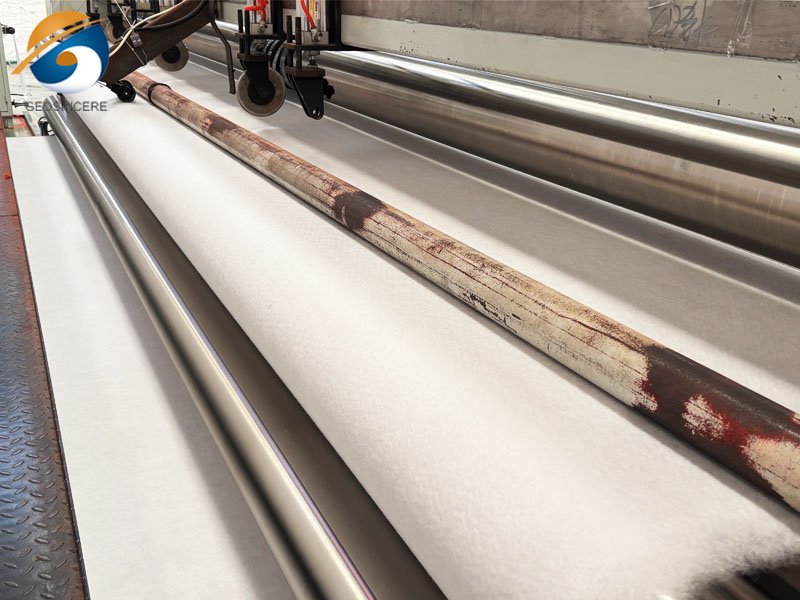
- Non-Woven Geotextiles: Staple fibers coalesce via needle-punching or thermal adhesion, engendering porosity of 40–60% and permittivity of 0.01–0.1 cm/s (ASTM D4491). Needle-punching prevails in 70% of non-wovens, facilitating 100–800 gsm at 15–20% diminished outlays.
- Knitted Geotextiles: Yarn loops interlock for extensibility exceeding 50%, suiting seismic or coastal exigencies with 10–200 kN/m strengths. At 5% market fraction, knitting elevates premiums 30–50% for pliancy.
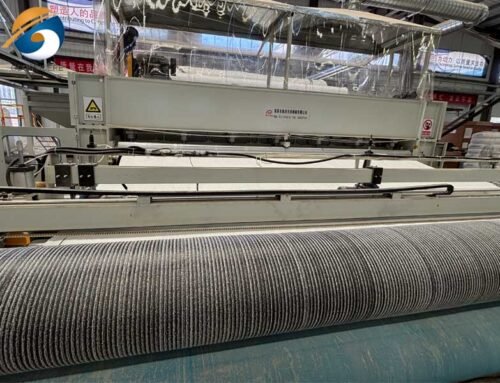
Geosincere harnesses avant-garde needle-punching and weaving apparatuses in our ISO 9001-accredited precincts, engendering PP non-wovens with isotropic fiber arrays for 95% hydraulic fidelity and PET wovens surpassing AASHTO M288 Class 1 stipulations.
1.2 Key Specifications and Parameters
Procuring apt geotextile membranes necessitates harmonizing attributes with exigencies, adhering to ASTM D4751 for filtration and GRI-GT8 for endurance. The ensuing compendium delineates archetypal metrics:
| Parameter | Description | Typical Range | Testing Standard | Performance Impact |
| Weight (GSM) | Density metric in grams per square meter | 100–800 gsm | ASTM D5261 | 400+ gsm augments puncture resistance 40% (ASTM D4833) yet escalates costs 50%; 100–200 gsm optimizes filtration, economizing 20% logistics. |
| Tensile Strength | Directional load tolerance (MD/XD) | 5–300 kN/m | ASTM D4595/D4632 | Woven >50 kN/m mitigates rutting 35% in pavements; non-woven 10–50 kN/m for drainage. |
| Elongation at Break | Pre-rupture deformation | 10–100% | ASTM D4632 | Non-wovens >50% dampen impacts in yielding soils; wovens <25% assure rigidity. |
| Puncture Resistance | Sharp load defiance | 100–900 N | ASTM D4833 | 300–500 N at 400 gsm safeguards liners in landfills, curbing breaches 25%. |
| Permittivity | Transverse hydraulic conductivity | 0.5–2.0 s⁻¹ | ASTM D4491 | >1.0 s⁻¹ in non-wovens obviates occlusion, amplifying drainage 40% in arterials. |
| Apparent Opening Size (AOS) | Filtration aperture | 0.05–0.5 mm | ASTM D4751 | 0.075–0.2 mm detains fines permitting 90% efflux in arenaceous strata. |
| UV Resistance | Post-exposure retention | >80% at 500 hours | ASTM D4355 | Imperative for surficial erosion; stabilizers append 5–10% cost, prolonging viability 15–20 years. |
| Chemical Resistance | pH and contaminant tolerance | pH 2–13 | ASTM D543 | PP defies acids; PET accommodates alkalis, pivotal for leachates. |
Geosincere’s 300 gsm non-woven PP membrane tenders 30 kN/m tensile, 150 L/m²/s flux, and 0.15 mm AOS, validated for Class 2 rigors under AASHTO M288, guaranteeing 98% viability in vehicular corridors.
1.3 Primary Applications
Geotextile membranes’ polyvalence propels permeation across domains:
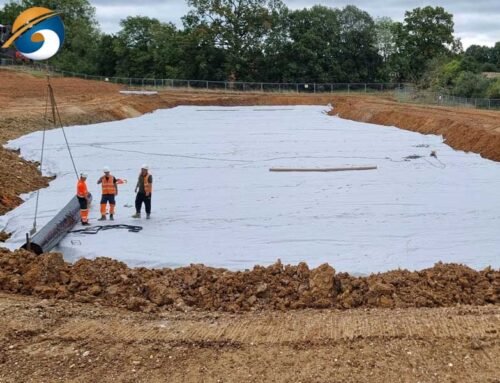
- Road Construction and Pavement Rehabilitation: Subgrade demarcation averts fouling, prolonging service 25–50% and curtailing aggregates 30%. Woven iterations (200–400 gsm) preponderate in 48% usages.
- Erosion Control: Slope and littoral fortification diminishes efflux 60–90%; non-wovens or coir overlays for revegetation.
- Drainage Systems: Aggregate sieves in French drains or pavements elevate efficacy 40%, with non-wovens forestalling 95% siltation.
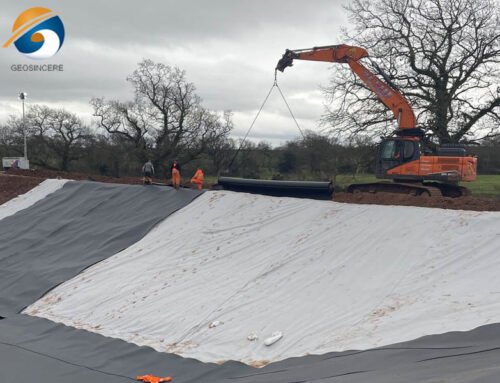
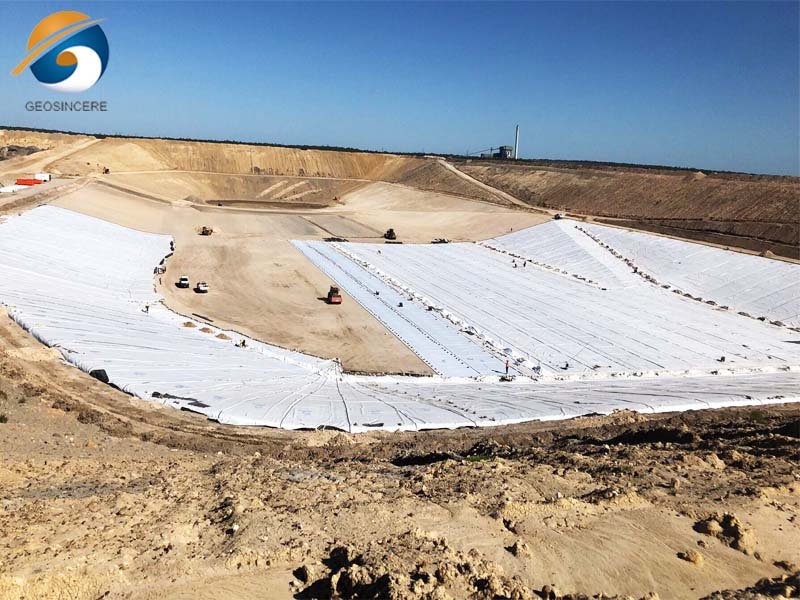
- Landfills and Waste Containment: Geomembrane buffers, leachate sequestration, and 90% pollution abatement.
- Ancillary Deployments: Rail ballast (20% vibration attenuation), agriculture (15% irrigation retention), mining (tailings impoundment), and littoral bulwarks (30% surge dissipation).
2. How Much Is The Geotextile Membrane Price?
Geotextile membrane pricing in 2025 averages USD 0.15–7.50 per square meter, with non-woven at USD 0.15–3.00/m² and woven at USD 0.30–7.50/m², per sector indices. Deployment appends 20–50% (USD 0.50–2.00/m²), whereas voluminous tenders (>10,000 m²) from entities like Geosincere confer 15–25% rebates, compressing efficacious tariffs to USD 0.12–2.00/m². This segment dissects pricing antecedents with empirical substantiation for meticulous fiscal orchestration.
2.1 Geotextile Membrane Price – Type
Fabric typology engenders 40–50% variance, linked to process intricacy and capability. Non-wovens helm 65% quota for hydraulic prowess.
- Non-Woven Geotextiles: USD 0.15–3.00/m²; needle-punched PP thrives in drainage (100–150 L/m²/s), diminishing occlusion 30% in arterials. Geosincere’s 200 gsm iteration: USD 0.40–1.00/m², ASTM D4491 adherent.
- Woven Geotextiles: USD 0.30–7.50/m²; high-tenacity PET (50–300 kN/m) for fortification, truncating embankment lapses 40%. Premiums: USD 1.50–7.50/m².
- Knitted Geotextiles: USD 1.00–5.00/m²; pliant for littorals (50–200 kN/m), 5% allocation yet 20% augmented tariff.
| Type | Market Share | Tensile Strength (kN/m) | Price Range (USD/m²) | Key Function |
| Non-Woven | 65% | 5–50 | 0.15–3.00 | Filtration/Drainage |
| Woven | 30% | 20–300 | 0.30–7.50 | Reinforcement/Separation |
| Knitted | 5% | 10–200 | 1.00–5.00 | Protection/Flexible Loads |
2.2 Geotextile Membrane Price – Material Composition
Substrates dictate 30–40% disparities, with synthetics oscillating 5–8% yearly vis-à-vis petroleum benchmarks (USD 1,300/MT PP, 2025).
- Polypropylene (PP): USD 0.15–2.00/m²; 65% hegemony, pH 2–13 defiance for impoundments; non-woven PP economizes 25% drainage outlays.
- Polyester (PET): USD 0.30–2.50/m²; 20% stake, 100 kN/m potency for arterials; 15% surcharge yet 20% protracted tenure in alkalescent milieux.
- Polyethylene (PE): USD 0.10–1.50/m²; insubstantial for transients, 10% portion.
- Natural (Coir/Jute): USD 0.10–1.00/m²; degradable, 5% quota, 15% emission abatement albeit 3–5 year cyclicity.
- Recycled Blends: USD 0.12–1.00/m²; nascent 10% surge, 20% thrift with 10% diminished footprint, ISO 14001 ratified.
Pristine substrates assure 95% fidelity (GRI-GT7), meriting 10–15% surcharges over reprocessed.
2.3 Geotextile Membrane Price – Weight and Thickness
GSM inversely correlates with resilience: +100 gsm elevates puncture defiance 20–30% yet tariffs 25–40%. Caliper (0.5–5 mm) appends 5–10% for surficial coatings.
- Lightweight (100–200 gsm): USD 0.15–0.80/m²; >100 L/m²/s transmittance for horticulture, economizing USD 5,000–10,000 petite locales.
- Medium (200–400 gsm): USD 0.30–1.50/m²; 20–50 kN/m for arterials, 300 N puncture tolerance.
- Heavyweight (400–800 gsm): USD 0.80–3.00/m²; >50 kN/m for impoundments, 20–50 year prolongation.
Geosincere’s 400 gsm woven: USD 1.20/m², attuned for burdensome erosion.
2.4 Geotextile Membrane Price – Project Size and Scale
Magnitude begets 10–30% thrift: >50,000 m² depresses unit levies USD 0.10–0.50/m².
- Small (<10,000 m²): USD 0.40–1.50/m²; domiciliary efflux at USD 3,000–5,000 aggregate.
- Medium (10,000–50,000 m²): USD 0.25–1.00/m²; arterials, 15% voluminous thrift.
- Large (>50,000 m²): USD 0.15–0.80/m²; e.g., 100,000 m² rail: USD 15,000–80,000.
Geosincere’s nominal MOQ (1,000 m²) abets scalability via graduated tariffs.
2.5 Geotextile Membrane Price – Installation Method and Labor
Deployment: 20–50% totality (USD 0.50–2.00/m²), disparate by modality:
- Manual Overlap: USD 0.50–1.00/m²; 300–500 mm junctures for 95% potency, 12–18 inch fasteners.
- Mechanical: USD 0.30–0.80/m² for expansive terrains; cylinders append USD 0.10–0.30/m².
- Anchoring: USD 0.05–0.15/m²; dowels per 1–2 m.
Remuneration: USD 20–50/hour Asia contra USD 50–100 North America. 10,000 m² venture: USD 5,000–10,000 remuneration; pre-sections economize 15% chronology.
2.6 Geotextile Membrane Price – Raw Material Quality
Pristine resins: 10–15% premium (USD 0.30–0.50/m²) for 95% probity versus 75% reprocessed, forestalling USD 50,000+ lapses. Adjuvants (UV/antioxidants): +5–10%, +20% longevity. Geosincere’s pristine PP conforms GRI-GT13, vindicating surcharges with 98% terrain fidelity.
2.7 Geotextile Membrane Price – Transportation and Logistics
Carriage: USD 0.05–0.30/m²; proximate USD 0.01–0.05, maritime USD 0.10–0.20. Coils (4–6 m broad, 50–100 m elongate) attenuate wastage 10%; Geosincere’s Taian nexus attains 98% punctuality to 60 realms.
2.8 Geotextile Membrane Price – Maintenance and Lifetime Costs
Yearly: USD 0.01–0.05/m² contra USD 0.10–0.20 gravel; 20–50 year span amortizes to USD 0.02/m²/year. Merit selections economize 25–40% protracted; derelictions levy USD 100,000+ remediation.
3. How to Choose the Right Geotextile Membrane
Optimum procurement attains 95–98% venture triumph via attribute congruence.
3.1 Assess Project Requirements
Pedological scrutiny: Arenaceous mandates non-woven (AOS 0.1–0.2 mm) for sieving; argillaceous woven (>50 kN/m) for demarcation. Burdens: 200–400 gsm for arterials; 600+ gsm mining. E.g., pisciculture: 150 gsm PP at USD 0.40/m², 0.075 mm AOS.
3.2 Prioritize Quality and Certifications
Pristine, GRI-GT8/AASHTO M288 ratified: 10–15% costlier yet 25% defect diminution. Geosincere’s arrays traverse 500-hour UV assays, ISO 14001 verdant.
3.3 Evaluate Installation Needs
Terrain ingress: Manual <5,000 m²; mechanical ampler. Junctures: 300–600 mm; consolidate 150 mm strata evading 10% recidivism.
3.4 Consider Long-Term Costs
Span: Heavyweight economizes 20–30% over 20 years; reprocessed abates emissions 15% at 10% upfront thrift.
3.5 Compare Suppliers
Collate Geosincere (USD 0.15/m² voluminous), BPM, TenCate. Assays corroborate 95% attribute fidelity; Sino provenance economizes 20–30% versus Europa.
4. Industry Trends Affecting Geotextile Membrane Prices
Viability and ingenuity sculpt 2025–2030 contours:
- Substrate Volatility: PP escalation 5–8% (USD 1,300/MT) from petroleum; 3–5% accruals prognosticated 2026.
- Verdant Transitions: Reprocessed (20% by 2030) economizes 10–20%, emissions -15%; coir augments 10% CAGR.
- Ampler Coils/Customization: 6–8 m breadths attenuate seams 15%, stabilizing Sino tariffs USD 0.15–2.00/m².
- Astute Membranes: Sensors append 15–20% yet truncate upkeep 30% via instantaneous oversight.
- Asia-Pacific Ascendance: 45% quota; Sino USD 5.9 trillion infra caps exports USD 0.15–1.50/m².
Geosincere vanguard 100% reprocessed PP arrays, consonant UN SDG 12.
5. Calculating Total Project Costs and Installation Tips
Exactitude fiscalization amalgamates constituents for 98% veracity.
5.1 Step-by-Step Cost Calculation
- Terrain Mensuration: Footprint +10–15% wastage = e.g., 10,000 m² arterial → 11,000 m².
- Attribute Election: 300 gsm non-woven at USD 0.80/m² = USD 8,800 substrates.
- Deployment Accrual: USD 0.50–1.00/m² remuneration + USD 0.10 apparatus = USD 6,600–11,000.
- Carriage/Annexes: USD 0.05–0.20/m² freight + USD 0.05 fasteners = USD 1,100–2,750.
- Totality: USD 16,500–22,550; 20-year amortization: USD 0.08–0.11/m²/year.
AASHTO apparatuses or Geosincere’s gratuitous estimator tender 95% precision. Exemplar: 50,000 m² erosion – Substrates USD 7,500–125,000; Totality USD 15,000–200,000, 25% infra riprap.
5.2 Installation Best Practices
- Prefatory: Calibrate substratum, expunge detritus for 20% void abatement.
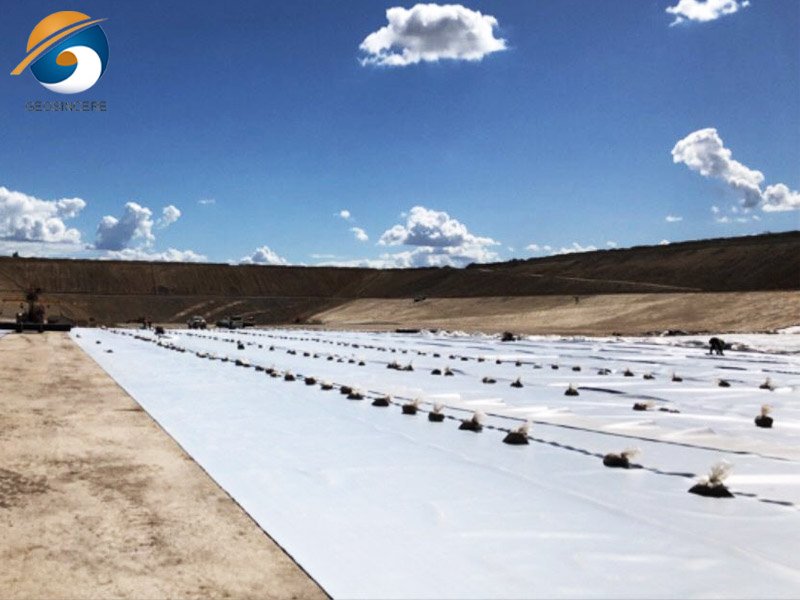
- Extrusion: Unfurl orthogonal efflux; 300–600 mm junctures, staple per 1 m.
- Infill/Consolidation: 150–300 mm plies, CBR >20% evading punctures.
- Scrutinies: Traction assays (ASTM D4632) for 100% wholeness; oversee 10% anomalies.
- Thrift Counsel: Squad pedagogy amplifies efficacy 15%; phased extrusions attenuate clime retardations 20%.
Enactment attenuates 5–10% excesses, maximizing recoupment.
6. Conclusion
Geotextile membrane tariffs, spanning USD 0.15 to 7.50 per square meter, encapsulate a nuanced equilibrium of typology, substrate, mass, and magnitude in a sector burgeoning at 6.7% CAGR. Non-woven PP tenders economical drainage at USD 0.15–3.00/m², woven PET stalwart fortification to USD 7.50/m², with deployment inflating totals 20–50%. Empiricals affirm merit: 50% pedological firmness, 60% erosion palliation, 25–40% span economization per canons. For exigent arterials or impoundments, 400+ gsm leviathans warrant surcharges via 20–50 year endurance.
Shandong Geosino New Material Co., Ltd. (Brand: Geosincere) champions ratified pristine membranes for zenith efficacy. Our Taian bastion exports competitively from USD 0.15/m² voluminous, ministering universal imperatives. For tailored tariffs, attributes, or directives, interface our cadre—exalt your ventures with Geosincere’s credible novelties.