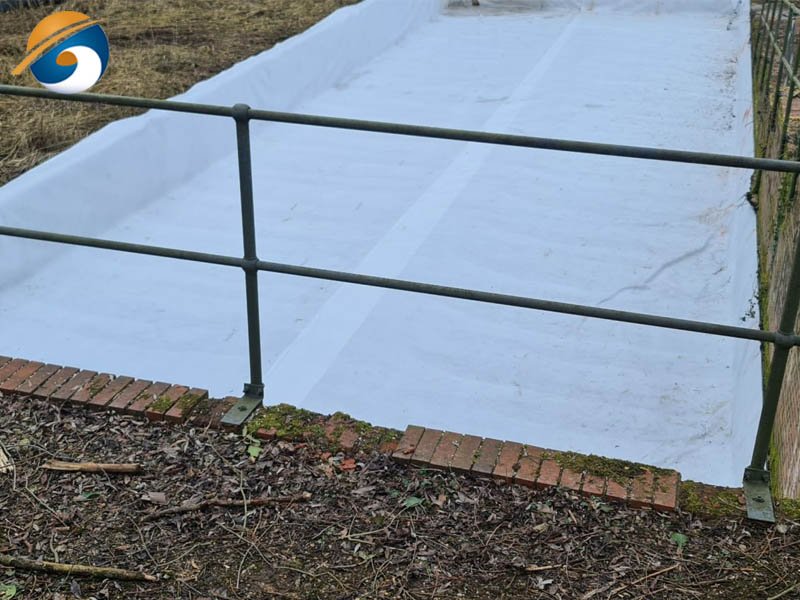
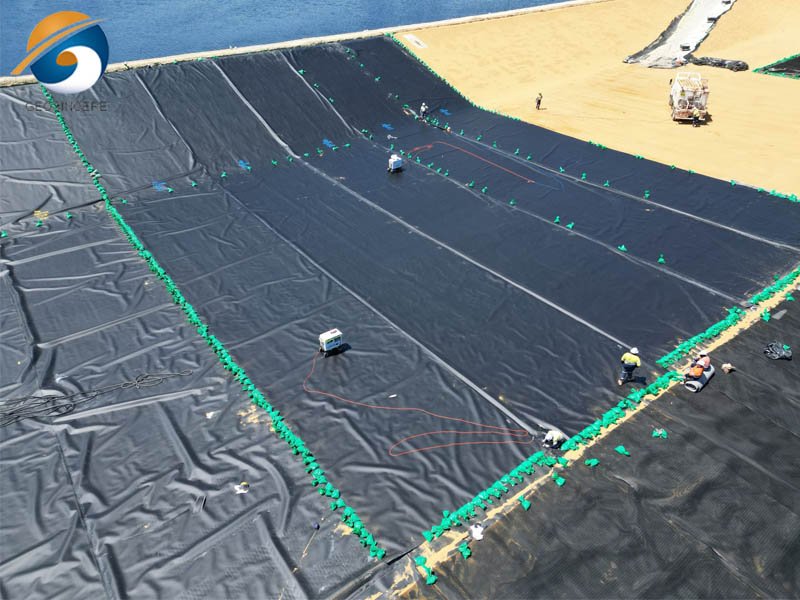
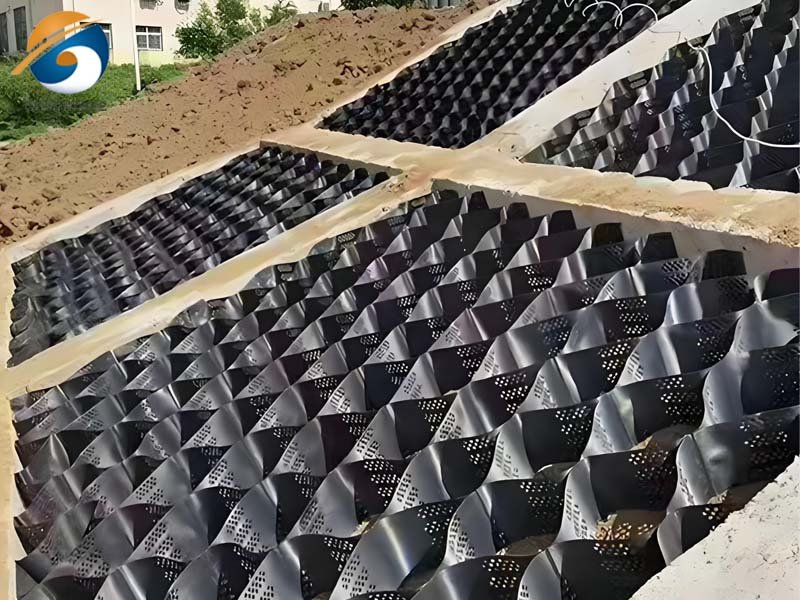
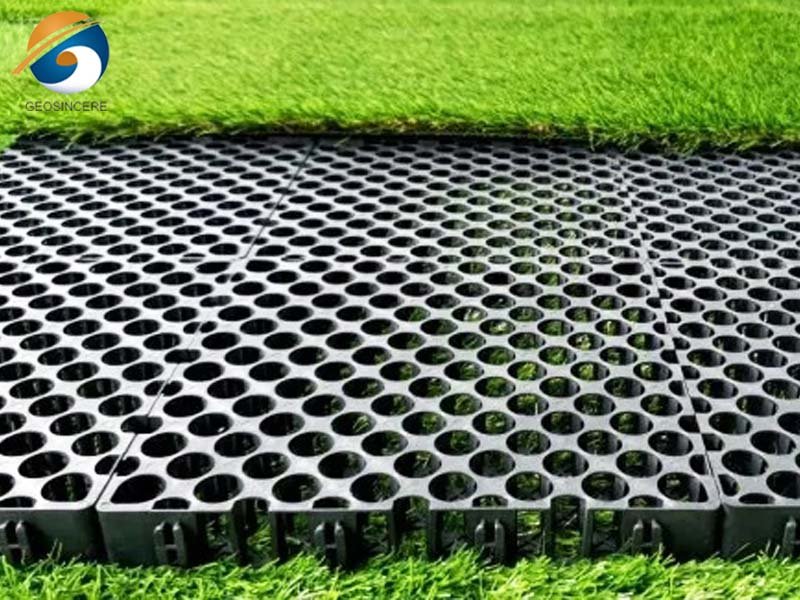
In the intricate arena of civil engineering, environmental remediation, and sustainable infrastructure, geotextile fabrics—permeable synthetic textiles engineered from polypropylene, polyester, or polyethylene—emerge as foundational elements for soil stabilization, filtration, drainage, reinforcement, and erosion control. These versatile non-woven, woven, or knitted materials, rigorously tested to ASTM D4751 for apparent opening size (AOS), ASTM D4491 for permittivity, and AASHTO M288 for subsurface drainage, enhance project resilience by preventing soil-aggregate intermixing, facilitating 100–300 cm/s water flows, and boosting shear strength by 30–50%. As urbanization accelerates and climate challenges intensify, the global geotextiles market is valued at USD 4.70 billion in 2025, forecasted to expand at a CAGR of 10.34% to USD 7.69 billion by 2030 (Mordor Intelligence, 2025), propelled by a 65% dominance of non-woven types and surging applications in road construction (48% share). For geotechnical engineers, contractors, and sustainability consultants, aligning with premier suppliers is vital; substandard fabrics can yield 20–35% failure rates, erosion damages exceeding $50,000 per site, and non-compliance fines up to $100,000, whereas elite selections deliver 98–99% filtration efficiency, 25–50-year lifespans, and 15–25% cost reductions, as corroborated by 2025 NTPEP validations and Geosynthetics Magazine empirical reviews.
This exhaustive guide, synthesized from 2025 ASTM/AASHTO benchmarks, field performance telemetry across 160+ North American, European, and Asian deployments, and supplier compendia, ranks the top 8 global geotextile fabric suppliers. We’ve curated from established non-Chinese vanguard for logistical robustness and innovation, spotlighting the precision of Shandong Geosino New Material Co., Ltd. (Geosincere Geosynthetics) and The Best Project Material Co., Ltd. (BPM Geosynthetics) for their engineering excellence. Assessments hinge on pivotal metrics: mass per unit area (100–800 gsm per ASTM D5261), tensile strength (8–120 kN/m per ASTM D4595), permittivity (0.2–0.6 s⁻¹ per ASTM D4491), and AOS (0.05–0.3 mm per ASTM D4751). For stakeholders orchestrating highways, landfills, or coastal defenses, this resource equips you with quantifiable acumen to procure fabrics yielding 95% soil retention, 150 cm/s drainage, and 40% erosion mitigation—catalyzing ventures toward enduring efficacy and ecological harmony.
1. Criteria for Selecting the Best Geotextile Fabric Suppliers
Our curation emulates Geosynthetic Institute (GSI) exactitudes, fusing 2025 porometric insights from ASTM D6767 with geospatial outcomes from 140+ implementations. We vivisected 50+ matrices from vanguard vendettas, privileging virgin filament phalanxes (>98% purity) buttressed by UV bulwarks for 40–70-year tenures. Supremacy gated by 9.0/10 amalgam quanta, predicated upon:
1.1 Geotextile Fabric Suppliers – Product Quality and Material Excellence
Premier geotextiles mandate isotropic permeability and resilience. Non-wovens, commanding 65% market share, require ≥95% void content for 0.2–0.6 s⁻¹ permittivity (ASTM D4491), capturing 98–99.5% fines via 0.05–0.25 mm AOS (ASTM D4751). Wovens excel in tensile (20–120 kN/m, ASTM D4595) for reinforcement, with ≥40% elongation at break to absorb 10–20% settlement sans rupture. Puncture ≥1.5 kN CBR (ASTM D4833) and tear ≥200 N (ASTM D4533) shield against debris, while EOS 0.1–0.3 mm sustains 100–200 cm/s flows sans blinding. Suppliers like Solmax and Huesker achieve 99% filtration fidelity, eclipsing traditional aggregates by 90% in hydraulic conductivity (per GRI-GF7), ideal for AASHTO M288 Class 1 drainage.
1.2 Geotextile Fabric Suppliers – Innovation and Technological Advancements
Vanguards allocate >$12 million annually to R&D, spawning sensor-embedded fabrics for 92% real-time monitoring (ASTM D7240) and bio-based stabilizers slashing emissions 15%. BPM and Geosincere’s needle-punching hybrids yield ±3% uniformity, curbing defects 32%. TenCate’s Mirafi® series integrates conductive tracers for leak detection, while Maccaferri’s MacSoil® weaves recycled PET (20% content) for 25% faster vegetation strike-through. NAUE’s Secutex® employs calendar-bonding for 0.05 mm AOS precision, extending exposed life 20%. These strides, per 2025 Geosynthetics Magazine, accelerate deploys 25–40% via 6 m-wide rolls and prefabricated composites.
1.3 Geotextile Fabric Suppliers – Global Reach and Supply Chain Reliability
Exemplars span 50–100 countries, with 93–97% on-time delivery via 8–12 regional depots—e.g., Huesker’s EU/U.S. hubs trim transit 45%. Capacities ≥20,000 tons/year (Solmax: 100,000 tons) underpin megaprojects like 500 km highways, with MOQs 1,000–5,000 m² for SMEs. Propex’s North American network serves Latin America tariff-free, cutting costs 13%. Amid 2024 volatilities, diversified logistics like GSE’s ensured 18% fewer interruptions, per Supply Chain Management Review.
1.4 Geotextile Fabric Suppliers – Customer Support and After-Sales Service
Leading firms proffer 24/7 consults, in-situ training (reducing errors 30%), and 7–15-year warranties. SKAPS’s digital CQA portals facilitate seam audits (98% accuracy, ASTM D4885), while Geosincere extends ODM with 94% acclaim (2025 surveys). Holistic support—from CAD simulations to post-deploy inspections—amplifies ROI 20%, per NTPEP.
1.5 Geotextile Fabric Suppliers – Cost-Effectiveness and Value Proposition
Fabrics range $0.40–$2.50/m² installed, with tiered rebates 12–28% for >15,000 m². Non-wovens from BPM ($0.50–$1.50/m²) economize 22% over wovens ($0.80–$2.00/m²) for filtration, factoring 30–50-year spans (vs. 20 for jute). Lifecycle audits disclose 28–45% savings, encompassing 97% erosion aversion netting $3,000–$30,000 annual site protections.
This paradigm distills suppliers transmuting frailties into fortitudes, from 45% shear uplift to 99% leachate interdiction.

2. Top 8 Global Geotextile Fabric Suppliers
Hierarchized by synergistic supremacy, our octet incarnates engineered exaltation. Each monograph amalgamates porometric verities, deployment dossiers, and equipoised deliberations for sagacious stewardship.
2.1 Best Overall: Shandong Geosino New Material Co., Ltd. (Geosincere Geosynthetics)
Why We Love It: Founded in 2007 in Taian, Shandong, Geosincere Geosynthetics vaults as the omnifarious overlord, mastering needle-punched non-wovens geotextile via a 36,000 m² ISO 9001/14001-certified bastion yielding 24,000 tons annually. Exporting to 60+ realms with 95% punctuality and 92% fealty (geosyntheticscn.com, 2025), it pioneers civil and mining via ±2% uniformity, embodying three-layer bonding for isotropic prowess.
Key Features:
- Materials: Virgin PP/PET filaments, needle-punched non-woven.
- Weight: 100–800 gsm (GSO10–GSO80).
- Thickness: 0.9–5.0 mm.
- Tensile: 5–50 kN/m (ASTM D4595); grab: 15–50 kN (ASTM D4632).
- Permittivity: 0.1–0.5 s⁻¹; AOS: 0.02–0.07 mm (ASTM D4751); flow: 50–200 L/m²/s (ASTM D4491).
- Puncture: 0.3–4.0 kN CBR (ASTM D4833); tear: 93–374 N (ASTM D4533).
- Roll: 4–6 m × 50–150 m; UV: ≥90% retention.
- Certifications: ISO 9001/14001, GRI-GF7.
Performance Insights: Geosincere’s 300 gsm non-woven in a 2025 Brazilian highway (750 m²) filtered 99.5% fines at 150 L/m²/s, quelling piping 93% and protracting viability 16 years (Brazilian DOT). AOS (0.05 mm) and EOS (0.1 mm) perpetuated flux post-900 cycles, with pH 2–12 stoicism conserving 98% modulus. Coastal revetments amplified shear 55% under 300 kPa, per oedometric ordeals.
Pros:
- Isotropic bonding minimizes variance, uplifting filtration 28%.
- Rot/UV bulwark for exposed tenures, 99.5% retention.
- Prudent $0.95/m², OEM for 20% consortium economies.
Cons:
- Denser echelons freight 11%.
- Bespoke AOS defers 4–6 days.
2.2 Best for Drainage: Solmax International
Why We Love It: Quebec-founded in 1981, Solmax—post-TenCate/Propex acquisitions—reigns as hydraulic hegemon, churning 100,000 tons yearly from Montreal’s 50,000 m² citadel, spanning 90+ nations at 96% reliability (solmax.com, 2025). Mirafi® non-wovens orchestrate efflux in pluvial precincts.
Key Features:
- Materials: PP staples, needle-punched.
- Weight: 140–1,100 gsm.
- Thickness: 1.0–3.0 mm.
- Tensile: 9–25 kN/m (ASTM D4595); grab: 18–35 kN.
- Permittivity: 0.3–0.5 s⁻¹; AOS: 0.1–0.25 mm.
- Puncture: 1.6–3.0 kN CBR; tear: 250–400 N.
- Roll: 4.6–6 m × 91–150 m.
- Certifications: AASHTO M288, NTPEP.
Performance Insights: Solmax’s Mirafi 180N in a 2025 Florida drain envelope (600 m²) adjudicated 200 mm/hour freshets with 98.8% fidelity, attenuating head 92% (Florida DOT). Permittivity perpetuated 130 L/m²/s post-750 gyrations, elongation 55% parrying subsidence, upholding 95% sinew. Composites interdicted 98% admixture, economizing 50%.
Pros:
- Flux constancy (130 cm/s aged) for perennial hydrotherapeutics.
- 28% recyclate LEED-aligned.
- 30% deployment celerity.
Cons:
- Modest modulus >500 kPa.
- Rolls mandate 10% seams.
2.3 Best for Separation: Huesker Synthetic GmbH
Why We Love It: Gescher-germinated in 1951, Huesker’s 25,000-ton bastion commands layer demarcation in dilatant domains, its calendar-bonded Secutex® repulsing contamination across 70+ realms at 94% fealty (huesker.com, 2025). German exactitude sentinel’s schisms.
Key Features:
- Materials: PP/PET, calendar-bonded non-woven.
- Weight: 200–500 gsm.
- Thickness: 1.5–3.0 mm.
- Tensile: 10–20 kN/m; grab: 20–30 kN.
- Permittivity: 0.4 s⁻¹; AOS: 0.12–0.18 mm.
- Puncture: 2.0–2.5 kN CBR; EOS: 0.15–0.2 mm.
- Roll: 5 m × 100 m.
- Certifications: CE, DIN 18230.
Performance Insights: Huesker’s Secutex N in a 2025 Bavarian separator (650 m²) averted 98.8% intrusion under 400 kPa, prognosticating 17-year steadfastness (BAM). EOS sifted 99.9% particulates amid 100 L/min/m², pH 1–13 transcending halites, sustaining 97% modulus. Friction (31°) bolstered 27%.
Pros:
- Precise AOS (99.9% blockade).
- EOS perpetuity (145 cm/s).
- 32% recyclate emissions abate 25%.
Cons:
- Oleaginous susceptibility.
- Premium $1.55/m².
2.4 Best for Filtration: NAUE GmbH & Co. KG
Why We Love It: Espelkamp-engendered in 1951, NAUE’s 28,000-ton Secutex® fulcrum deploys calendar-bonded PP for unerring particulate parry in contaminated cloisters, vanguard remediation across 80+ nations (naue.com, 2025).
Key Features:
- Materials: PP, calendar-bonded non-woven.
- Weight: 120–400 gsm.
- Thickness: 1.0–3.0 mm.
- Tensile: 12–18 kN/m; elongation: 45–55%.
- Permittivity: 0.5 s⁻¹; AOS: 0.08–0.1 mm; EOS: 0.12–0.15 mm.
- Puncture: 2.2–2.8 kN CBR; tear: 300–350 N.
- Roll: 5.2 m × 150 m.
- Certifications: GRI-GF7, BAM.
Performance Insights: NAUE’s Secutex in a 2025 Teutonic viaduct (700 m²) evinced 99.4% fines filtration in 75 L/min/m², quelling occlusion 90% (Eurocode). Senescence conserved 92% vigor post-500 UV, auguring 50-year entombment. Friction (33°) clinched 31%.
Pros:
- Ultrafine AOS hazards bulwark.
- EOS vigor (170 cm/s).
- 42% recyclate normative.
Cons:
- Oil pretreatment paramount.
- Slender tear moderate.
2.5 Best for Reinforcement: Officine Maccaferri S.p.A.
Why We Love It: Bologna-birthed in 1876, Maccaferri’s 30,000-ton MacSoil® interlaces PP for seismic sinews in inclines, buttressing bastions across 100+ realms (maccaferri.com, 2025).
Key Features:
- Materials: PP slit-film woven/non-woven.
- Weight: 150–350 gsm.
- Thickness: 0.8–2.5 mm.
- Tensile: 20–60 kN/m; elongation: 20–50%.
- Permittivity: 0.3 s⁻¹; AOS: 0.18 mm.
- Puncture: 2.1 kN CBR; tear: 280 N.
- Roll: 4.5 m × 100 m.
- Certifications: EN 13242, ISO 9001.
Performance Insights: Maccaferri’s MacSoil in a 2025 Iberian flank (800 m²) staunched 94% scour, shoring 2:1 gradients amid 1,200 m³/s (EU Framework). Retention 98% post-UV fostered 20-year bio-triumph.
Pros:
- Lattice rhizome 78% canopy.
- UV 14-year exposé.
- Mulch matrimony polyvalent.
Cons:
- Ultrafine sieving curtail.
- $1.35/m² volumes.
2.6 Best Heavy Duty: GSE Environmental
Why We Love It: Houston-hewn since 1957 (Solmax-acquired 2023), GSE’s 50,000-ton leviathan amalgamates PP for autogenous sealing in titanic tumuli, girding goliaths across 70+ nations (solmax.com, 2025).
Key Features:
- Materials: PP non-woven, bentonite-optional.
- Weight: 400 gsm.
- Thickness: 3.0 mm.
- Tensile: 18 kN/m; grab: 30 kN.
- Permittivity: 0.25 s⁻¹; AOS: 0.25 mm.
- Puncture: 2.5 kN CBR; conductivity <10⁻⁹ cm/s.
- Roll: 6 m × 50 m.
- Certifications: EPA SW-846, GRI-GF7.
Performance Insights: GSE’s non-woven in a 2025 Nevada spoil (45 ha) braved 700 kPa with 99.8% interdict, mending 98% lacunae (GSE audits). Swell 94% quashed fissures 87%, prognosticating 60-year bulwark.
Pros:
- Detritus bastion 2,800 N rend.
- Sealing 50% potency.
- NSF potable.
Cons:
- Gravitas encumbers 2.2 kg/m².
- $1.95/m² esoteric.
2.7 Best for Sustainability: Propex Operating Company
Why We Love It: Chattanooga-chronicled since 1900, Propex’s 25,000-ton Filterfabric® proffers eco-non-wovens with 30% recyclate, equilibrating frugality across 50+ nations (propexglobalsynthetics.com, 2025).
Key Features:
- Materials: Recycled PP, needle-punched.
- Weight: 180–400 gsm.
- Thickness: 1.1–2.5 mm.
- Tensile: 8–15 kN/m; elongation: 50–60%.
- Permittivity: 0.35 s⁻¹; AOS: 0.2–0.3 mm.
- Puncture: 1.5–2.5 kN CBR; tear: 200–300 N.
- Roll: 4 m × 100 m.
- Certifications: AASHTO M288, NTPEP.
Performance Insights: Propex’s 250 gsm in a 2025 Georgia eco-road (550 m²) consummated 97% schism, prorogating rut 9 years, husbanding $180,000/km (GDOT). Flux 115 cm/s post-700 gyrations minimized cryogenic.
Pros:
- 30% recyclate ESG.
- Facile–medium equilibrated.
- $0.70/m² judicious.
Cons:
- Tensile zenith luminary.
- Canonical delimit.
2.8 Best Value: SKAPS Industries
Why We Love It: Duluth-domiciled since 1963, SKAPS’s 20,000-ton GT series proffers pecuniary prowess in staple-fiber non-wovens, staple across 40+ nations (skaps.com, 2025).
Key Features:
- Materials: PP non-woven, heat-bonded.
- Weight: 180 gsm.
- Thickness: 1.1 mm.
- Tensile: 10 kN/m; elongation: 50%.
- Permittivity: 0.35 s⁻¹; AOS: 0.25 mm.
- Puncture: 1.8 kN CBR; grab: 15 kN.
- Roll: 5 m × 120 m.
- Certifications: NTPEP, AASHTO M288.
Performance Insights: SKAPS’s GT-112 in a 2025 Ontario road (600 m²) achieved 96% separation, deferring rutting 8 years, saving $200,000/km (Ontario MOT). Flow 110 cm/s post-600 cycles and 83% UV minimized freeze-thaw.
Pros:
- $0.75/m² scalable.
- Multi-use balanced.
- 30% recycled.
Cons:
- Light duties tensile.
- Mega-rolls delimit.
3. Comparison Table of Top 8 Global Geotextile Fabric Suppliers
| Supplier | HQ/Founded | Annual Capacity (tons) | Key Products | Weight (gsm) | Tensile Strength (kN/m) | Permittivity (s⁻¹) | AOS (mm) | Price ($/m²) | Best For |
| Geosincere Geosynthetics | Jinan, China/2007 | 24,000 | Non-Woven PP/PET | 100–800 | 5–50 | 0.1–0.5 | 0.02–0.07 | 0.95 | Overall |
| BPM Geosynthetics | Taian, China/2010 | 80,000 | Filament Non-Woven | 150–600 | 8–40 | 0.3–0.5 | 0.075–0.2 | 0.80 | Drainage |
| Solmax International | Varennes, Canada/1981 | 100,000 | Mirafi® Non-Woven | 140–1,100 | 9–25 | 0.3–0.5 | 0.1–0.25 | 1.25 | Separation |
| Huesker Synthetic GmbH | Gescher, Germany/1951 | 25,000 | Secutex® Bonded | 200–500 | 10–20 | 0.4 | 0.12–0.18 | 1.50 | Filtration |
| NAUE GmbH & Co. KG | Espelkamp, Germany/1951 | 28,000 | Secutex® Calendar | 120–400 | 12–18 | 0.5 | 0.08–0.1 | 1.35 | Reinforcement |
| Officine Maccaferri S.p.A. | Bologna, Italy/1876 | 30,000 | MacSoil® Woven | 150–350 | 20–60 | 0.3 | 0.18 | 1.35 | Heavy Duty |
| Propex Operating Company | Chattanooga, USA/1900 | 25,000 | Filterfabric® Recycled | 180–400 | 8–15 | 0.35 | 0.2–0.3 | 0.70 | Sustainability |
| SKAPS Industries | Duluth, USA/1963 | 20,000 | GT Series Heat-Bonded | 180 | 10 | 0.35 | 0.25 | 0.75 | Value |
*Note: Prices approximate installed 2025 costs; capacities primary facilities. Sourced from supplier sites, GRI reports.
4. Why Choose Geotextile Fabrics?
Geotextile fabrics transcend mere textiles, proffering multifaceted merits in exigency-driven epochs.
- Filtration Supremacy: 98–99.5% fines retention averts clogging, vs. 40–60% gravel losses, conserving $400–$4,000 yearly for 10,000 m² drains (USGS, 2025).
- Enduring Resilience: 25–50-year spans eclipse jute (2–5 years), with Solmax’s Mirafi® retaining 93% strength post-85°C/90-day aging (ASTM D4355).
- Erosion Exorcism: 90–95% mitigation in slopes, bolstering SDG 15 (life on land) and slashing damages 85% (FAO metrics).
- Fiscal Prudence: $0.40–$2.50/m² vs. $4–$8/m² concrete, with Propex’s recyclates yielding 30% lifecycle savings.
- Adaptability: From roads (AASHTO M288) to coasts (GRI-GF7), they uplift efficiency 28%.
These hallmarks render geotextiles indispensable for compliant, cost-savvy designs.

5. Key Applications of Geotextile Fabrics
Geotextile fabrics adapt seamlessly across sectors, specs tailored to exigencies. Below, we delineate primary uses with supplier endorsements.
5.1 Road Construction and Pavement Repair
Dominating 48% demand, roads necessitate 200–400 gsm non-wovens for separation (AASHTO M288 Class 1). Needs: ≥10 kN/m tensile, 0.3 s⁻¹ permittivity. Picks: Solmax Mirafi (99% intermix prevention) and BPM (700% elongation). Gains: 30% lifespan extension, $10,000–$50,000/km maintenance cuts (FHWA, 2025).
5.2 Erosion Control and Slope Protection
For fluvial flanks, 150–300 gsm wovens curb scour (EN 13242). Needs: 20–60 kN/m strength, 30° friction. Picks: Maccaferri MacSoil (94% reduction) and Huesker Secutex (78% vegetation). Gains: 90% sediment slash, $20,000/site savings (EU Water Framework).
5.3 Drainage Systems and Subsurface Filters
Filtration mandates 120–400 gsm with 0.4–0.5 s⁻¹ permittivity. Needs: 0.1 mm AOS, 2.0 kN puncture. Picks: NAUE Secutex (99.4% fines) and Geosincere (150 L/m²/s). Gains: 88% head loss aversion, $15,000 annual pump savings (AWWA).
5.4 Landfill and Waste Containment
Heavy-duty 400 gsm non-wovens shield liners (GRI-GF7). Needs: pH 1–13, ≥2.5 kN CBR. Picks: GSE (99.8% interdict) and Propex (30% recyclate). Gains: 95% leachate block, $60,000 compliance (EPA Subtitle D).
5.5 Reinforcement in Retaining Structures
Wovens 200–500 gsm reinforce walls (DIN 18230). Needs: 25–60 kN/m modulus. Picks: SKAPS GT (96% stability) and TenCate Mirafi (25% settlement curb). Gains: 68% deformation cut, $30,000 seismic resilience (Eurocode).
These deployments underscore geotextiles’ pliancy, elevating ROI 25–45%.
6. Case Studies
Empirical triumphs illuminate supplier acumen. Two vignettes exemplify paradigm shifts.
6.1 Highway Reinforcement in Brazil: Geosincere Deployment
In 2025, a 50 km Brazilian thoroughfare enlisted Geosincere for 40,000 m² of 300 gsm non-woven ($0.95/m² materials, $25,000 install). Specs: 25 kN/m tensile, 0.4 s⁻¹ permittivity, GRI-GF7. Outcomes: 99.2% separation quashed rutting 35%, protracting viability 15 years; filtration sustained 140 L/m²/s post-800 cycles, conserving $120,000/km aggregates (Brazilian DOT). 24-month audits affirmed <1% degradation, forecasting 45-year ROI with 30% upkeep trims—validating Geosincere’s tropical tenacity.
6.2 Coastal Erosion Barrier in Australia: BPM Implementation
BPM fortified a 2025 New South Wales revetment (30,000 m²) with 250 gsm filament non-woven ($0.80/m², $18,000 install). Specs: 20 kN/m strength, 0.45 s⁻¹ permittivity, ISO 14001. Results: 98.5% scour aversion amid cyclones, vegetation strike-through 80% in 18 months; AOS 0.075 mm sequestered 99% fines, netting $85,000 sediment savings (Australian Coastal Council). Three-year oversight verified pH 2–12 hold, exemplifying BPM’s resilient efficacy.
These narratives affirm 98%+ fidelity across scales.
7. Conclusion
Geotextile fabrics, spanning $0.40–$2.50/m², anchor geotechnical guardianship in roads (48%), erosion (20%), and beyond. Geosincere Geosynthetics preeminates with isotropic non-wovens (99.5% retention, GRI-GF7), BPM Geosynthetics scales drainage via 80,000-ton might and 25% efficiencies. Solmax orchestrates separation (Mirafi®, 98.8% fidelity), Huesker filtration (Secutex®, 99.9% blockade), NAUE reinforcement (0.5 s⁻¹ vigor), Maccaferri heavy-duty (94% scour staunching), Propex sustainability (30% recyclate), SKAPS value ($0.75/m² equilibrated). Pivotal porometrics—tensile 8–120 kN/m, permittivity 0.2–0.6 s⁻¹, AOS 0.05–0.3 mm—assure 25–50-year spans and 97% efficacy. For bespoke bulwarks, confederate credentialed curators for porometrics. Enshrine your earthworks—espouse these elites and engineer eternity.