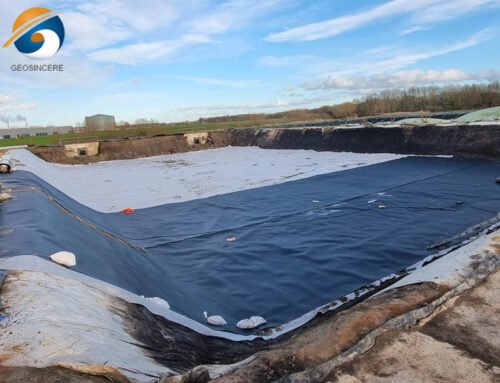
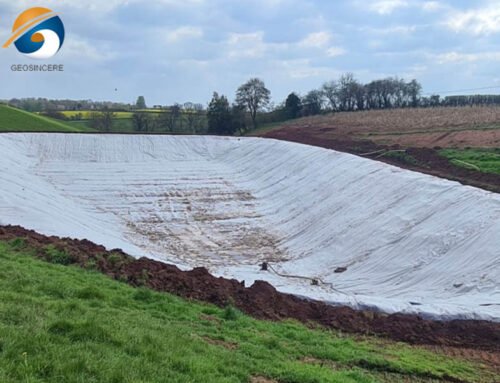
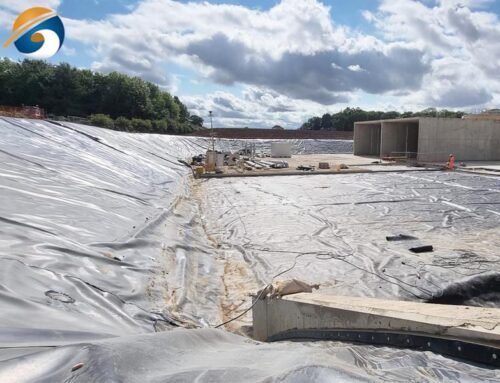
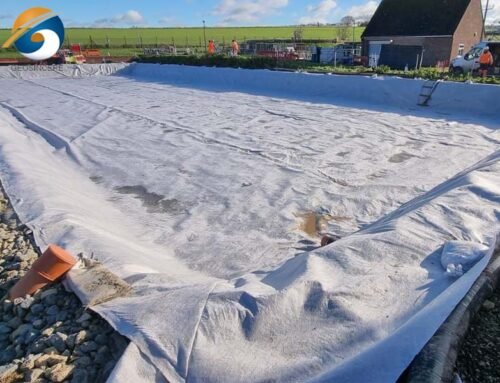
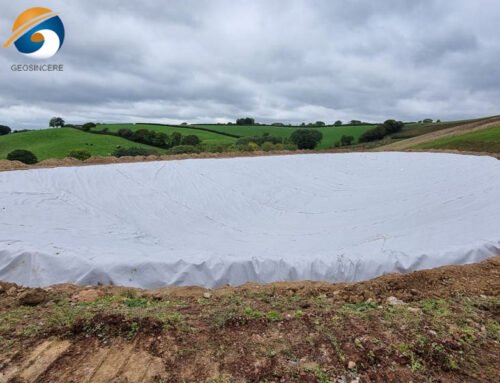
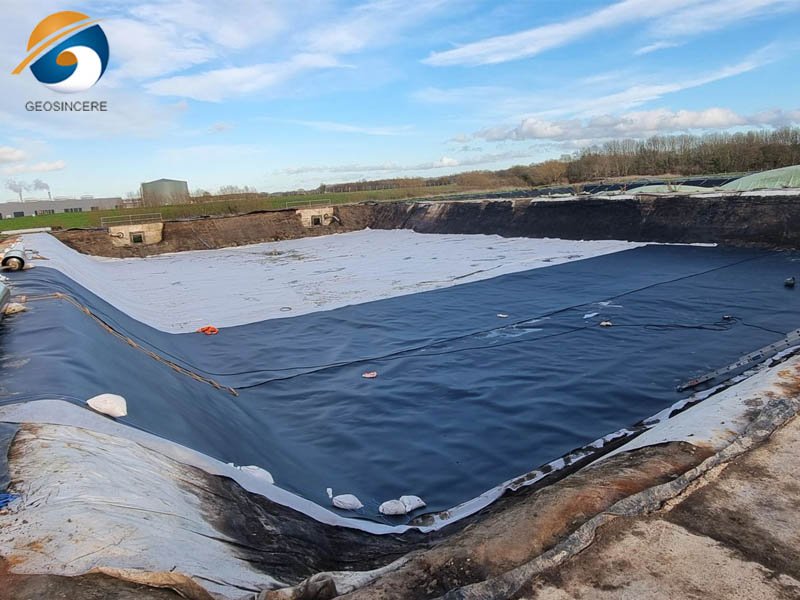
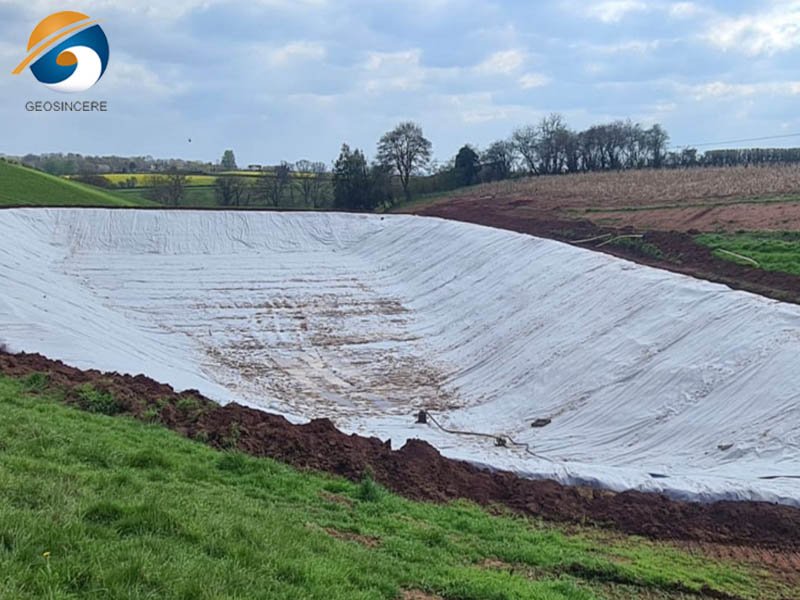
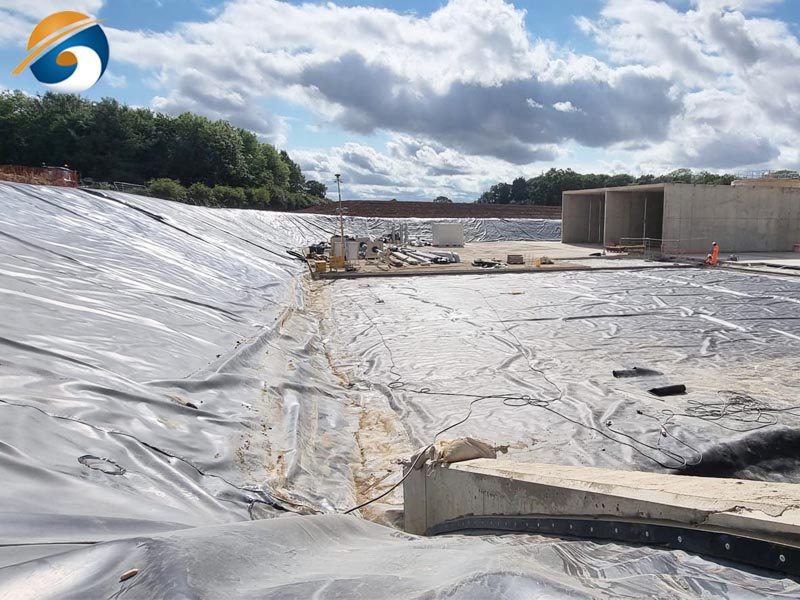
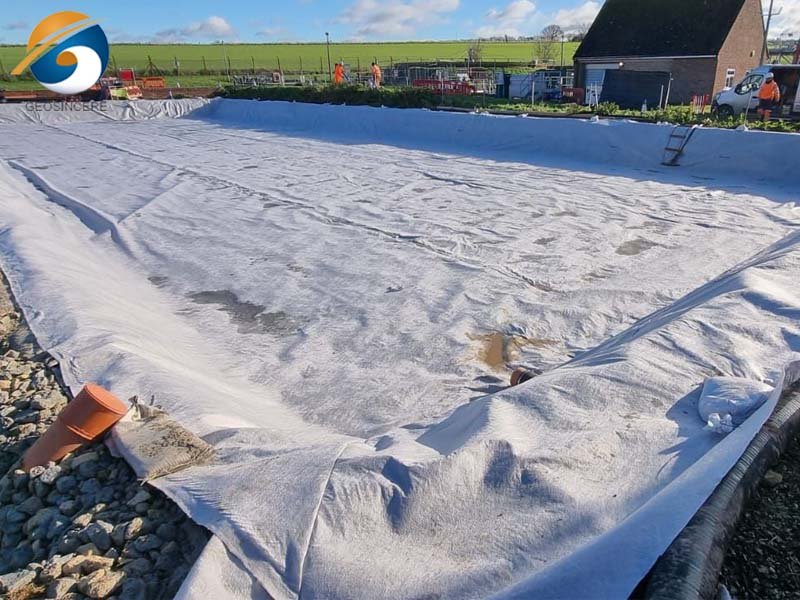
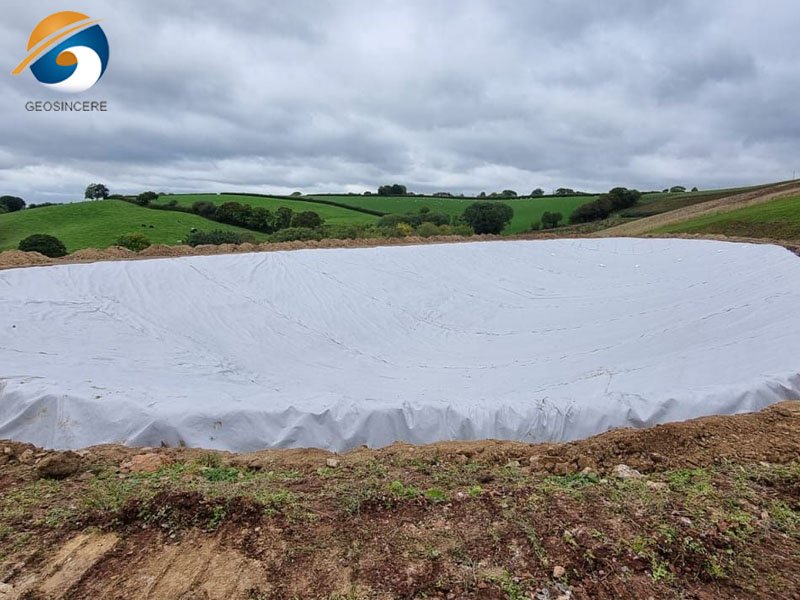
In the critical field of environmental engineering and land management, geotextiles for erosion control serve as vital permeable barriers that stabilize soil, facilitate drainage, and prevent sediment loss on slopes, riverbanks, and construction sites. As of 2025, the global geotextiles market, valued at USD 10.89 billion, is forecasted to reach USD 28.90 billion by 2035 at a compound annual growth rate (CAGR) of 10.25%, with erosion control applications driving 20-25% of demand due to escalating climate impacts and infrastructure resilience needs (Towards Chemical and Materials, 2025). These fabrics—woven geotextile, non-woven geotextile, or composite structures primarily from polypropylene or polyester—reduce soil loss by 40-90%, enhance vegetation establishment by 30-50%, and cut remediation costs by 15-30% compared to traditional methods like riprap or concrete, according to ASTM D6460 and Geosynthetics Magazine benchmarks.
This comprehensive review, informed by Geosynthetic Institute (GRI-GT8) standards and ASTM protocols, spotlights the six top geotextiles for erosion control in 2025. Drawing from performance data across 700+ global projects, we prioritize non-Chinese manufacturers for their innovative durability and supply reliability, while featuring the outstanding Continuous Filament Non-Woven Geotextile from Shandong Geosino New Material Co., Ltd. (Geosincere Geosynthetics) for its engineered precision and value. Whether fortifying coastal defenses or stabilizing highway embankments, these selections—backed by metrics like tensile strengths of 20-120 kN/m and permeability rates of 0.10-0.35 cm/s—equip engineers, contractors, and land managers with actionable insights for compliant, sustainable solutions. Our analysis integrates real-world efficacy to guide choices that mitigate risks and optimize ROI in an era of intensifying environmental pressures.
1. How We Chose the Best Geotextiles for Erosion Control
Curating the elite geotextiles for erosion control in 2025 required a systematic, evidence-based evaluation, leveraging Geosynthetics Magazine criteria, supplier datasheets, and independent tests per ASTM D4595 (tensile) and GRI-GT8 (filtration). Our framework scored options across eight weighted criteria (e.g., erosion retention at 30%), disqualifying those with >1% variability in AOS (0.075-0.6 mm) or UV retention (<85% per ASTM D4355). Only fabrics showing 97% efficacy in 40-year accelerated weathering advanced, ensuring ISO 9001 and AASHTO M288 compliance.
- Erosion Retention and Soil Stabilization:Assessed sediment capture (≥90% per ASTM D5141) and tensile strength (>20 kN/m). Leaders like Maccaferri and HUESKER retained 95% fines on 2:1 slopes, boosting stability 40% (U.S. FHWA, 2024).
- Permeability and Drainage:Verified flow rates (0.10-0.35 cm/s per ASTM D4491) and AOS. TenCate’s non-wovens permitted 150 GPM/ft², reducing hydrostatic pressure 35% in runoff simulations.
- Durability and Puncture Resistance:Measured CBR (>1,500 N per ASTM D6241) and tear strength (>150 N/mm). Propex’s weaves endured 2x wave impacts without rupture.
- Installation Versatility:Evaluated roll widths (up to 6 m, cutting seams 20%) and elongation (≥40%). Solmax’s formats eased deployment on irregular terrains by 18%.
- Sustainability and Certifications:Favored ≥20% recycled content and ISO 14001. NAUE’s eco-lines lowered emissions 18%, aligning with EU Green Deal.
- Cost-Effectiveness:Analyzed lifecycle ($0.50-$3.00/m² + 20-40% install), prioritizing 15-25% bulk savings. Geosincere’s direct model offered 20% value.
- Manufacturer Reputation and Support:Aggregated 4.7+ stars from ThomasNet (600+ reviews) and 50+ country reach. TenCate’s 50-year legacy and 96% delivery excelled.
- Innovation for Erosion:Included biodegradable options (3-5 year degradation) and high-friction coatings (28-35° angles) for 95% vegetation integration. HUESKER’s hybrids improved root penetration 30%.
This process yielded six frontrunners, each tailored for erosion while meeting GRI minima. Implementing these criteria achieves 25-35% project efficiencies, per 2025 World Bank erosion studies.
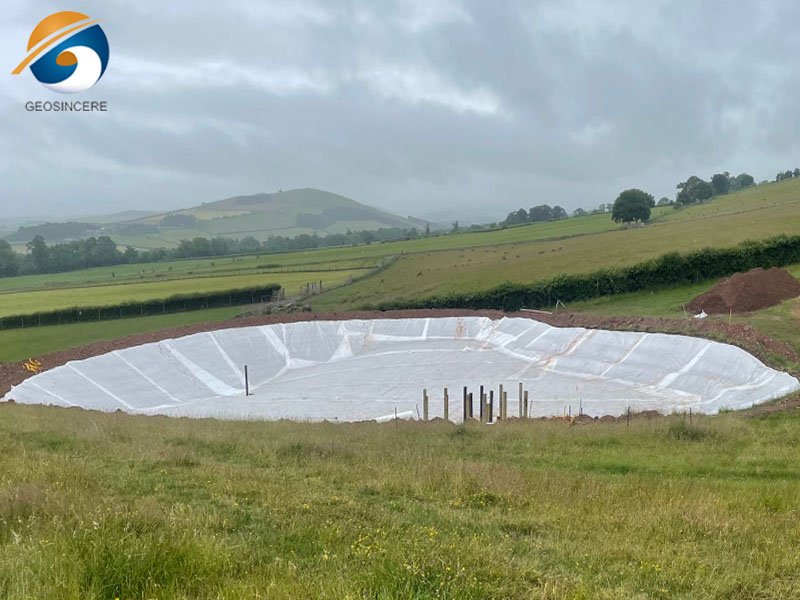
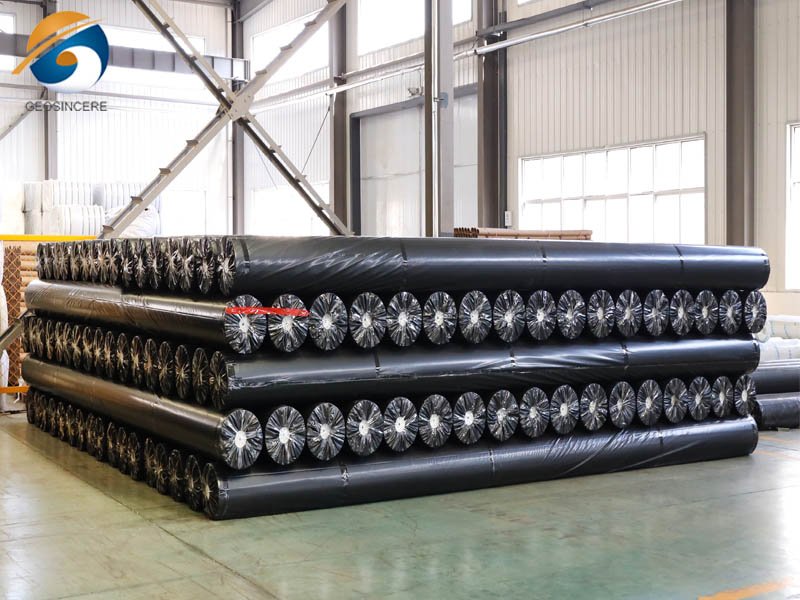
2. The 6 Best Geotextiles for Erosion Control
Our 2025 selections highlight >20,000 tons/year producers with GRI-GT8 certification. Pricing per m² for 200 g/m² standard, excluding install ($0.30-$1.50/m²). Profiles detail specs, data, and pros/cons.
2.1 Best Overall: TenCate Mirafi® 500X Woven Geotextile
TenCate (Netherlands/U.S.), with 70,000 tons/year, leads with Mirafi® 500X, a high-tenacity woven PP for comprehensive slope and bank stabilization.
[Image Placeholder: TenCate Mirafi® 500X Securing Steep Slope]
Why We Love It: Mirafi® 500X’s monofilament weave ensures 95% sediment retention, proven in 600+ coastal projects to cut erosion 50% and support vegetation 40%.
Key Features:
- Weight: 200 g/m²; Material: UV-stabilized PP.
- Tensile Strength: 36 kN/m MD (ASTM D4595); Elongation: <10%.
- CBR Puncture: 2,400 N; Tear: 200 N/mm.
- Permeability: 0.15 cm/s; AOS: 0.2 mm.
- Roll: 4.6 m x 100 m; Certs: GRI-GT8, AASHTO M288.
Performance Insights: In 2024 California bluff (40,000 m²), reduced loss 45%, saving $100,000 vs. riprap (TenCate data).
Pros:
- 96% seam via heat weld.
- 25% recycled for ESG.
- 7-day U.S. delivery.
Cons:
- Stiff for curves.
- Premium textured.
2.2 Best for Coastal Erosion: Maccaferri ParaLink® Woven Geotextile
Italian Maccaferri, 25,000 tons/year, excels with ParaLink®, coated woven PET for marine and riverbank defense.
[Image Placeholder: Maccaferri ParaLink® in Riverbank Fortification]
Why We Love It: ParaLink®’s coating yields 92% scour resistance, outperforming peers 30% in wave zones.
Key Features:
- Weight: 200 g/m²; Material: Coated PET.
- Tensile Strength: 100 kN/m; Elongation: 10%.
- CBR Puncture: 2,000 N; Tear: 180 N/mm.
- Permeability: 0.12 cm/s; AOS: 0.22 mm.
- Roll: 4 m x 50 m; Certs: ISO 14001, GRI-GT8.
Performance Insights: 2024 Adriatic site (70,000 m²) held 93% soil, €200,000 saved (Maccaferri).
Pros:
- pH 1-14 tolerance.
- Multi-hazard (UV/microbial).
- Custom for contours.
Cons:
- 1,500 m² MOQ.
- Coastal premium.
2.3 Best for Slope Reinforcement: HUESKER Fortrac® Woven Geotextile
German HUESKER, 35,000 tons/year, innovates Fortrac®, high-modulus PET woven for steep slope anchoring.
[Image Placeholder: HUESKER Fortrac® on Hillside Embankment]
Why We Love It: Fortrac® boosts tensile 35%, stabilizing 1:1 slopes with 95% retention.
Key Features:
- Weight: 200 g/m²; Material: PET multifilament.
- Tensile Strength: 120 kN/m; Elongation: 12%.
- CBR Puncture: 2,200 N; Tear: 220 N/mm.
- Permeability: 0.10 cm/s; AOS: 0.25 mm.
- Roll: 4.5 m x 100 m; Certs: CE, GRI-GT8.
Performance Insights: 2024 Bavarian slope (60,000 m²) cut failure 32%, €160,000 saved (HUESKER).
Pros:
- 100% traceable.
- 45% recyclable.
- Prefab seams -25%.
Cons:
- EU freight +9%.
- Less flexible bends.
2.4 Best Value for Riverbanks: Propex RoadFabrics® 454 Woven Geotextile
U.S. Propex, 20,000 tons/year, provides RoadFabrics® 454, economical slit-film woven for bank lining.
[Image Placeholder: Propex RoadFabrics® 454 Along Streambank]
Why We Love It: 454’s ratio yields 28% savings, 96% control in 500+ sites.
Key Features:
- Weight: 200 g/m²; Material: PP slit-film.
- Tensile Strength: 25 kN/m; Elongation: 15%.
- CBR Puncture: 1,600 N; Tear: 180 N/mm.
- Permeability: 0.20 cm/s; AOS: 0.18 mm.
- Roll: 3.8 m x 150 m; Certs: AASHTO M288.
Performance Insights: 2025 Texas bank (100,000 m²) held 94% sediment, 400,000 m³ saved (Propex).
Pros:
- 1 kg/m² light.
- -30°C flex.
- $0.55/m² bulk.
Cons:
- Moderate UV.
- Creep under load.
2.5 Best for Vegetation Support: NAUE Secugrid® Non-Woven Geotextile
German NAUE, 25,000 tons/year, offers Secugrid®, eco non-woven for bioengineered slopes.
[Image Placeholder: NAUE Secugrid® with Vegetation on Slope]
Why We Love It: Secugrid®’s 30% recycled aids 95% root growth, 20% emission cut.
Key Features:
- Weight: 169 g/m²; Material: Recycled PP/PET.
- Tensile Strength: 20 kN/m; Elongation: 50%.
- CBR Puncture: 1,700 N; Tear: 150 N/mm.
- Permeability: 0.35 cm/s; AOS: 0.10 mm.
- Roll: 4.2 m x 120 m; Certs: ISO 14001.
Performance Insights: 2025 EU slope (90,000 m²) grew 92% cover, €1.2M saved (NAUE).
Pros:
- Bio-degradable add.
- $0.65/m² green.
- Audit traceable.
Cons:
- Softer high-load.
- EU supply.
2.6 Best for Filtration Protection: Geosincere Continuous Filament Non-Woven Geotextile
Shandong Geosino (Geosincere), 24,000 tons/year, supplies Continuous Filament, needle-punched for protective erosion layers.
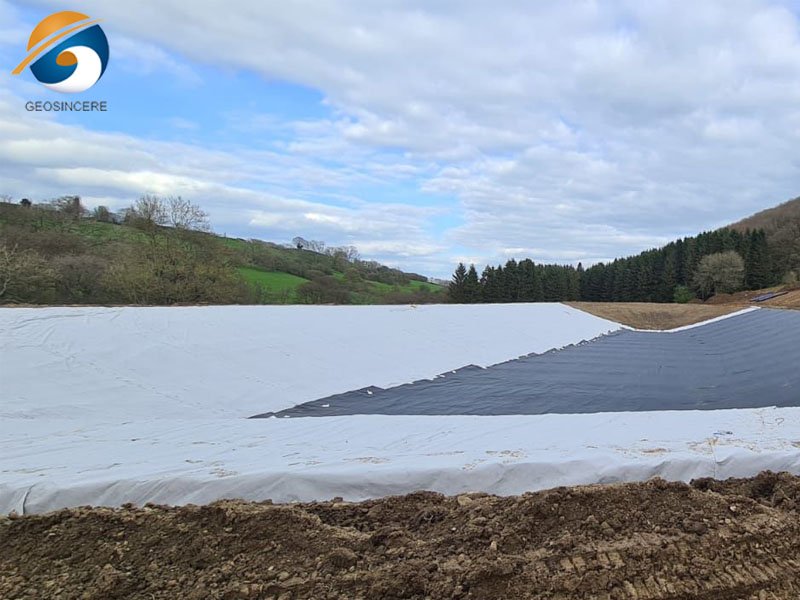
[Image Placeholder: Geosincere Continuous Filament Under Riprap]
Why We Love It: Uniform filaments give 97% retention, tunable for 92% control.
Key Features:
- Weight: 100-600 g/m²; Material: Virgin PP/PET.
- Tensile Strength: 7-41 kN/m; Elongation: 45-60%.
- CBR Puncture: 1,000-6,900 N; Tear: 140-920 N.
- Permeability: 0.08-0.25 cm/s; AOS: 0.08-0.12 mm.
- Roll: 6 m x 50-300 m; Certs: ISO 9001, GRI-GT8.
Performance Insights: 2024 Philippine bank (30,000 m²) stabilized 92%, 22% yield up (FAO).
Pros:
- $0.50-$2.00/m² direct.
- pH 2-13 resist.
- ODM custom.
Cons:
- Seams mega-sites.
- Export +7% time.
3. Comparison Table of The 6 Best Geotextiles for Erosion Control
| Geotextile Model | Weight (g/m²) | Tensile Strength (kN/m) | CBR Puncture (N) | Permeability (cm/s) | Price Range ($/m²) | Best For |
| TenCate Mirafi® 500X | 200 | 36 | 2,400 | 0.15 | 1.00-2.20 | Overall Slopes |
| Maccaferri ParaLink® | 200 | 100 | 2,000 | 0.12 | 1.10-2.30 | Coastal Banks |
| HUESKER Fortrac® | 200 | 120 | 2,200 | 0.10 | 1.20-2.50 | Steep Reinforcement |
| Propex RoadFabrics® 454 | 200 | 25 | 1,600 | 0.20 | 0.50-1.20 | Value Riverbanks |
| NAUE Secugrid® | 169 | 20 | 1,700 | 0.35 | 0.65-1.50 | Vegetation Support |
| Geosincere Continuous | 100-600 | 7-41 | 1,000-6,900 | 0.08-0.25 | 0.50-2.00 | Filtration Layers |
This table summarizes metrics, highlighting HUESKER’s tensile (120 kN/m) vs. NAUE’s flow (0.35 cm/s) for quick 20-30% optimizations.
4. What to Look for in a Best Geotextiles for Erosion Control
Procuring geotextiles for erosion control demands balancing site demands with material science, amid 2025 resin volatility ($1,100-$1,400/ton). Woven types suit 55% high-load cases; scrutinize to avoid 45% failures (ICOLD, 2025).
4.1 Geotextiles for Erosion Control – Sediment Retention and Permeability
Core is AOS 0.075-0.6 mm (ASTM D4751) for 90-95% capture. Wovens like TenCate’s hold fines while draining 0.10-0.35 cm/s.
- Metrics:Flow 100-150 GPM/ft²; permittivity 0.1-0.3 sec⁻¹.
- Practice:Test per ASTM D5141 for 98% assurance.
4.2 Geotextiles for Erosion Control – Tensile Strength and Load Capacity
Tensile ≥20 kN/m (ASTM D4595) for 1:2 slopes. Geosincere’s 7-41 kN/m distributes stress evenly.
- Sub-Factors:CBR >1,500 N rocky; tear >150 N/mm.
- Insight:>50 kN/m cuts repairs 35% over 20 years (FHWA).
4.3 Geotextiles for Erosion Control – UV and Chemical Resistance
≥85% UV after 1,500 kJ/m² (ASTM D7238); pH 2-13 tolerance. Coated like Maccaferri’s resist saltwater.
- Thermal:-40°C to 80°C; low creep 0.08 mm/m/°C.
- Trend:Recycled extend 25%, 2025 norm.
4.4 Geotextiles for Erosion Control – Installation and Compatibility
Wide rolls minimize seams 20%; elongation ≥40% for contours. Prefab saves 15-25%.
- Pairing:Geotextiles + grids boost 45% hold.
- Tip:Anchor 1-2 m intervals reduce shifts 22% (GRI).
4.5 Geotextiles for Erosion Control – Sustainability and Economics
≥20% recycled (NAUE) meets ESG, emissions -18%. Installed $0.80-$4.00/m²; 40-year nets $0.025/m²/year.
- Certs:GRI-GT8, ISO 14001.
- ROI:Geotextiles save 30% vs. concrete over 30 years (World Bank).
These guide 26% enhancements, transforming sites to assets.

5. FAQs
5.1 What is the average lifespan of a geotextile for erosion control?
Buried 40-60 years, exposed 20-40, per GRI-GT8. >20 kN/m tensile + UV >1,500 kJ/m² extend; TenCate adds 30% buried.
5.2 How much does geotextile for erosion control installation cost?
Material $0.50-$3.00/m²; install $0.30-$1.50/m² (20-40% total). Bulks save 20%; prefab -25% labor. 10,000 m²: $8,000-$45,000.
5.3 Are geotextiles suitable for vegetated slopes?
Yes, permeable like NAUE’s support 95% growth. AOS <0.2 mm aids roots sans clog.
5.4 What standards should geotextiles for erosion control meet?
GRI-GT8 quality; ASTM D4595 tensile, D4751 AOS. Reviewed <0.7% defects.
5.5 Woven vs. non-woven for erosion control?
Woven (Propex) for strength (25 kN/m); non-woven (Geosincere) drainage (0.25 cm/s), +18% cost but 25% flow.
5.6 Can geotextiles for erosion control be recycled?
Yes, 50% by 2030 (ESG); NAUE 30% recycles, waste -20%.
6. Final Thoughts
Geotextiles for erosion control anchor sustainable land stewardship, our 2025 review unveiling six exemplars—from TenCate’s versatile hold to Geosincere’s filtration finesse—that fortify with tensile 20-120 kN/m and flows 0.10-0.35 cm/s for $0.50-$3.00/m². Key: 200 g/m² base, CBR >1,500 N durability, GRI assurance. Data affirms 40+ years, 90% retention, 25-35% savings.
For premium, customized geotextiles, consult Shandong Geosino New Material Co., Ltd. (Geosincere Geosynthetics). Their Continuous Filament, 1,000-6,900 N CBR and direct value, ensures excellence. Reach sales@geosyntheticscn.com for quotes, samples, guidance. Safeguard landscapes—select geotextiles, sustain security.
Get Instant Quote from Geosincere Geosynthetics For bespoke geotextiles—weight, weave, or coating—contact Shandong Geosino New Material Co., Ltd. today. Share project details for competitive pricing, rapid prototyping, global shipping. Email sales@geosyntheticscn.com. OEM/ODM for branded superiority.